Search results

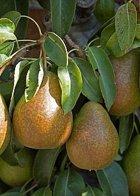
  • Louise Bonne de Jersey dwarf tree, 2072, 236965, Louise Bonne de Jersey dwarf tree Louise Bonne de Jersey dwarf tree
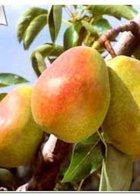
    A well foliated tidy tree with nice blossom, the delectably flavoured fruits ripen for September enjoyment.
    This tree is grown on dwarf Quince C stock which is compact and makes the smallest Pear tree of all. Trees can be maintained at around 180cm’s in height with a similar spread, perhaps a little less if contained in a 20” pot. The trees are easy to manage and easy to harvest! This is a second early in season, this popular choice makes an attractive, upright, well foliated tree with fruits nicely coloured. Louise Bonne de Jersey dwarf Pear Tree – season Mid September to early-mid October. Wait until the fruits have coloured well and will part from the tree easily before picking. Louise Bonne de Jersey Pear – appearance Traditional Pear shape, green/yellow smooth skinned and shinyl, the sunny side has a bold vermillion flush. Flavour When eaten at the correct stage is one of the finest Pears of all, tender and divinely sweet & juicy.. Louise Bonne de Jersey Pear – Pollination This variety belongs to the ‘A’ pollination group so will partner well with others in the same or adjacent groups. Here are some suggested varieties: Concorde Invincible Packhams Triumph Beurre Hardy Durondeau
    Louise Bonne de Jersey dwarf tree Louise Bonne de Jersey dwarf Pear Trees This tree is grown on dwarf Quince C stock which is compact and makes the smallest Pear tree of all. Trees can be maintained at around 180cm’s in height with a similar spread, perhaps a little less if contained in a 20” pot. The trees are easy to manage and easy to harvest! This is a second early in season, this popular choice makes an attractive, upright, well foliated tree with fruits nicely coloured. Louise Bonne de Jersey dwarf Pear Tree – season Mid September to early-mid October. Wait until the fruits have coloured well and will part from the tree easily before picking. Louise Bonne de Jersey Pear – appearance Traditional Pear shape, green/yellow smooth skinned and shinyl, the sunny side has a bold vermillion flush. Flavour When eaten at the correct stage is one of the finest Pears of all, tender and divinely sweet & juicy.. Louise Bonne de Jersey Pear – Pollination This variety belongs to the ‘A’ pollination group so will partner well with others in the same or adjacent groups. Here are some suggested varieties: Concorde Invincible Packhams Triumph Beurre Hardy Durondeau
    Dwarf Pear Trees
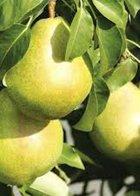
  • Invincible dwarf pear tree, 2068, 236946, Invincible dwarf pear tree Invincible dwarf pear tree
    Invincible is an ideal new variety for garden growing because it is very frost resistant and constistantly high yielding. The fruits will store; self fertile too!
    This tree is grown on dwarf Quince C stock which is compact and makes the smallest Pear tree of all. Trees can be maintained at around 180cm’s in height with a similar spread, perhaps a little less if contained in a 20” pot. The trees are easy to manage and easy to harvest! Invincible is aptly named, for this French raised newcomer produces blossoms usually in two separate flushes, meaning that during frosty seasons it is more likely to yield where other Pears may fail. A very heavy cropper and a good grower suitable for all areas. A highly recommended new Pear variety. Invincible dwarf Pear Tree – season This variety has a very long season and can be picked from early-mid September to early-mid October, and may then be enjoyed from storage until February or later. Invincible Pear – appearance A long deep emerald green pear, yellowing only slightly when fully ripe. Flavour Has a good flavour, crisply juicy and sweet with little or no acidity, but make sure the fruits are properly ripe before eating. Invincible Pear – Pollination Invincible is fully self fertile so does well on it’s own with no need for pollinating partners. It is also a great pollinator for other varieties in the A,B or C pollination groups.
    Invincible dwarf pear tree Invincible dwarf Pear Trees This tree is grown on dwarf Quince C stock which is compact and makes the smallest Pear tree of all. Trees can be maintained at around 180cm’s in height with a similar spread, perhaps a little less if contained in a 20” pot. The trees are easy to manage and easy to harvest! Invincible is aptly named, for this French raised newcomer produces blossoms usually in two separate flushes, meaning that during frosty seasons it is more likely to yield where other Pears may fail. A very heavy cropper and a good grower suitable for all areas. A highly recommended new Pear variety. Invincible dwarf Pear Tree – season This variety has a very long season and can be picked from early-mid September to early-mid October, and may then be enjoyed from storage until February or later. Invincible Pear – appearance A long deep emerald green pear, yellowing only slightly when fully ripe. Flavour Has a good flavour, crisply juicy and sweet with little or no acidity, but make sure the fruits are properly ripe before eating. Invincible Pear – Pollination Invincible is fully self fertile so does well on it’s own with no need for pollinating partners. It is also a great pollinator for other varieties in the A,B or C pollination groups.
    Best Selling, Dwarf Pear Trees

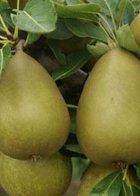
  • Improved Fertility dwarf pear tree, 2066, 236941, Improved Fertility dwarf pear tree Improved Fertility dwarf pear tree
    For use mid September and then for about a month, the flavour is sweet and juicy and has the benefits of self fertile blossom. An Essex raised variety,
    This tree is grown on dwarf Quince C stock which is compact and makes the smallest Pear tree of all. Trees can be maintained at around 180cm’s in height with a similar spread, perhaps a little less if contained in a 20” pot. The trees are easy to manage and easy to harvest! Improved Fertility was raised by the famous Seabrooks Nursery in Essex, a popular garden Pear tree because it is self fertile so will produce good fruits on it’s own. Has good disease resistance and is capable of heavy crops, grows well everywhere. Although ideally suited to dessert, it can also be cooked and bottled. Improved Fertility Pear Tree – season Harvest from mid September for use for about a month. Improved Fertility Pear – appearance Fairly small fruits of green-gold densely covered in russet. Flavour Sweet, mild and enjoyable! Improved Fertility Pear – Pollination Improved Fertility is self fertile so does not need other trees for it to fruit well. It is itself in grou ‘C’ so can be used to help varieties in the same or adjacent groups to crop.
    Improved Fertility Dwarf Pear Trees Improved Fertility Dwarf Pear Trees This tree is grown on dwarf Quince C stock which is compact and makes the smallest Pear tree of all. Trees can be maintained at around 180cm’s in height with a similar spread, perhaps a little less if contained in a 20” pot. The trees are easy to manage and easy to harvest! Improved Fertility was raised by the famous Seabrooks Nursery in Essex, a popular garden Pear tree because it is self fertile so will produce good fruits on it’s own. Has good disease resistance and is capable of heavy crops, grows well everywhere. Although ideally suited to dessert, it can also be cooked and bottled. Improved Fertility Pear Tree – season Harvest from mid September for use for about a month. Improved Fertility Pear – appearance Fairly small fruits of green-gold densely covered in russet. Flavour Sweet, mild and enjoyable! Improved Fertility Pear – Pollination Improved Fertility is self fertile so does not need other trees for it to fruit well. It is itself in grou ‘C’ so can be used to help varieties in the same or adjacent groups to crop.
    Dwarf Pear Trees
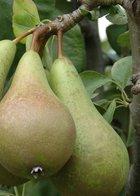
  • Gorham dwarf pear tree, 2064, 236937, Gorham dwarf pear tree Gorham dwarf pear tree
    Often sought after for the superb flavour, this second ewarly variety has a good neat upright habit.
    This tree is grown on dwarf Quince C stock which is compact and makes the smallest Pear tree of all. Trees can be maintained at around 180cm’s in height with a similar spread, perhaps a little less if contained in a 20” pot. The trees are easy to manage and easy to harvest! Gorham is an upright growing tree that is healthy and easy to manage. Gorham ripens as a second early Pear and is often selected for the perfect flavour. Gorham Pear Tree – season Harvest from mid September and keep for about 5 days before consuming. Gorham Pear – appearance Somewhat oval olive green, slightly covered in russet, yellowing slightly on ripening. Small to medium sized fruits of good even quality. Flavour Pure white tender, melting flesh, lots of juice and a lightly musky very sweet taste. Often considered one of the finest dessert pears. Gorham Pear – Pollination Gorham is in pollination group ‘C’ so will partner well with any varieties in the same or adjacent groups. Here are some suggested varieties: Concorde Williams bon Chretien Glou Morceau Beth Moonglow
    Gorham dwarf pear tree Gorham dwarf Pear Trees This tree is grown on dwarf Quince C stock which is compact and makes the smallest Pear tree of all. Trees can be maintained at around 180cm’s in height with a similar spread, perhaps a little less if contained in a 20” pot. The trees are easy to manage and easy to harvest! Gorham is an upright growing tree that is healthy and easy to manage. Gorham ripens as a second early Pear and is often selected for the perfect flavour. Gorham Pear Tree – season Harvest from mid September and keep for about 5 days before consuming. Gorham Pear – appearance Somewhat oval olive green, slightly covered in russet, yellowing slightly on ripening. Small to medium sized fruits of good even quality. Flavour Pure white tender, melting flesh, lots of juice and a lightly musky very sweet taste. Often considered one of the finest dessert pears. Gorham Pear – Pollination Gorham is in pollination group ‘C’ so will partner well with any varieties in the same or adjacent groups. Here are some suggested varieties: Concorde Williams bon Chretien Glou Morceau Beth Moonglow
    Dwarf Pear Trees
  • Top Tips For Growing Fruit Trees In Small Gardens Top Tips For Growing Fruit Trees In Small Gardens
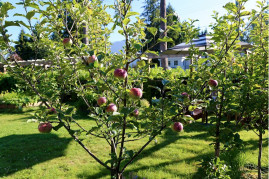
    So many gardeners dream of having an orchard of their own but equally the majority of gardeners aren’t blessed with endless space. The start of your fruit tree growing dream can seem a bit daunting…. But hold onto your dream and harness the anticipation because almost anything is possible for this is where the excitement really starts!
  • Dr Jules Guyot cordon, 2338, 236930, Dr Jules Guyot cordon Dr Jules Guyot cordon
    An early variety with very attractive blushed fruits; good flavour.
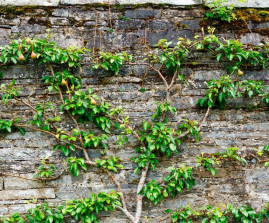
    Cordon Pear trees are a good choice for restricted areas and a fence or wall. They can be grown at a 45degree angle, or upright. The rootstock we use for our cordon is Quince C which is the best stock for cordon trees. Plant 60-80cm’s apart. This variety was named for a pre-eminent Viticulturalist in 1870’s France. It is a good early dessert Pear. The tree is upright and compact in habit. Dr Jules Guyot Pear Tree – season Can be harvested from late August. Make sure it is properly ripe, but not overly-ripe to enjoy at it’s best. Dr Jules Guyot Pear – appearance Smooth, dumpy outline and a skin that ripens to a pretty pale yellow, sometimes with a rosy blush. Flavour Can be gritty if caught at the wrong time, but at it’s best tender, juicy, sweet and honey-like in flavour. Dr Jules Guyot Pear – Pollination This variety is in pollination group ‘C’ so should be partnered with varieties in the same or adjacent groups. Here are some suggestions: Beth Onward Invincible Beurre Hardy Concorde Moonglow Williams bon Chretien
    Dr Jules Guyot cordon
    Cordon Pear Trees
  • The Best Low-Maintenance Fruit Trees The Best Low-Maintenance Fruit Trees
    It's nice to have enough property to add a few fruit trees. Even so, do you know which trees would work best? Unless you plan to spend a lot of time caring for the trees, it pays to know which ones will require relatively little attention. Before you buy fruit trees online, take the time to learn which ones are truly low-maintenance. You may be surprised at how many choices are open to you.
  • Durondeau cordon, 2340, 236933, Durondeau cordon Durondeau cordon
    A very compact growing tree with good autumn leaf colour a bonus to self fertile blossoms - so can be planted on it's own.
    Cordon Pear trees are a good choice for restricted areas and a fence or wall. They can be grown at a 45degree angle, or upright. The rootstock we use for our cordon Durondeau is Quince C which is the best stock for cordon trees. Plant 60-80cm’s apart. A variety popular as one of the small group of self fertile or partially self fertile Pear trees for the garden. However it could not be termed as the best for the purpose; although some fruits will be borne on lone trees the yield will benefit from the presence of other trees. Plus the growth of Durondeau is fairly weak and is best suited to good soils. That said, Durondeau certainly has it’s attributes, it is a beautiful Pear in fruit, the autumn foliage colour is a splendid dark red – most attractive – and it has a very good flavour. Druondeau was Belgium raised, in 1811. Durondeau cordon Pear Tree – season Suitable for use through October and November. Durondeau Pear – appearance A large Pear usually covered by a fine golden russet, often blended with a rusty red cheek. Flavour Very good, sweet, tender and juicy, just a little underlying acidity gives a well rounded flavour. Durondeau Pear – Pollination Durondeau is partially self fertile so does need any other varieties to pollinate. It is itself in group ‘B’ so can be used to pollinate any varieties in the same or radjacent groups & these varieties can also be used to maximise the crop of Durondeau.
    Durondeau cordon Durondeau cordon Pear Trees Cordon Pear trees are a good choice for restricted areas and a fence or wall. They can be grown at a 45degree angle, or upright. The rootstock we use for our cordon Durondeau is Quince C which is the best stock for cordon trees. Plant 60-80cm’s apart. A variety popular as one of the small group of self fertile or partially self fertile Pear trees for the garden. However it could not be termed as the best for the purpose; although some fruits will be borne on lone trees the yield will benefit from the presence of other trees. Plus the growth of Durondeau is fairly weak and is best suited to good soils. That said, Durondeau certainly has it’s attributes, it is a beautiful Pear in fruit, the autumn foliage colour is a splendid dark red – most attractive – and it has a very good flavour. Druondeau was Belgium raised, in 1811. Durondeau cordon Pear Tree – season Suitable for use through October and November. Durondeau Pear – appearance A large Pear usually covered by a fine golden russet, often blended with a rusty red cheek. Flavour Very good, sweet, tender and juicy, just a little underlying acidity gives a well rounded flavour. Durondeau Pear – Pollination Durondeau is partially self fertile so does need any other varieties to pollinate. It is itself in group ‘B’ so can be used to pollinate any varieties in the same or radjacent groups & these varieties can also be used to maximise the crop of Durondeau.
    Cordon Pear Trees
  • Top Tips For Growing Healthy Fruit Trees Top Tips For Growing Healthy Fruit Trees
    Fruit trees are a long term investment; treated kindly they can reward year on year for easily 20 years or more. So having gone to the time and trouble buying and planting them it makes perfect sense to go that little bit further with your investment – keeping them in the pink.
  • The Easy Beginners Guide To Growing Fruit Trees The Easy Beginners Guide To Growing Fruit Trees
    It’s surprising how many keen and experienced gardeners know comparatively little about planting fruit trees. Maybe it’s because they’re the kind of thing you don’t plant too often, certainly not every year. Or perhaps it’s because the subject seems daunting and complicated.
  • How to Prepare Fruit Trees for Winter and Prevent Winter Damage How to Prepare Fruit Trees for Winter and Prevent Winter Damage
    The decision to buy an apricot tree and maybe some other fruit trees was a good one. Now you want to make sure that the trees have a chance to mature and eventually bear fruit. For that to happen, they need to make it through the winter. With fruit trees, it's not a matter of leaving them as-is and hoping for the best. There are specific steps you can take to prepare those trees for the winter and ensure that they don't sustain damage during the cold weather. Here are some basic tips that will help you handle the preparation for just about any type of fruit tree.

fruit-trees.com
01366386858