Search results

  • Fruit Trees Nursery - Buy Apple Fruit Trees Home
  • About Us About Us
  • Improved Fertility cordon, 2344, 236942, Improved Fertility cordon Improved Fertility cordon
    A good variety for the one-tree Pear garden as this variety is self-fertile. Fruit can be eaten from mid September onwards, for about a month. Sweet flavour.
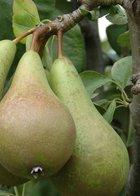
    Cordon Pear trees are a good choice for restricted areas and a fence or wall. They can be grown at a 45degree angle, or upright. The rootstock we use for our cordon is Quince C which is the best stock for cordon trees. Plant 60-80cm’s apart Improved Fertility was raised by the famous Seabrooks Nursery in Essex, a popular garden Pear tree because it is self fertile so will produce good fruits on it’s own. Has good disease resistance and is capable of heavy crops, grows well everywhere. Although ideally suited to dessert, it can also be cooked and bottled. Improved Fertility cordon Pear Tree – season Harvest from mid September for use for about a month. Improved Fertility Pear – appearance Fairly small fruits of green-gold densely covered in russet. Flavour Sweet, mild and enjoyable! Improved Fertility Pear – Pollination Improved Fertility is self fertile so does not need other trees for it to fruit well. It is itself in grou ‘C’ so can be used to help varieties in the same or adjacent groups to crop.
    Improved Fertility cordon Improved Fertility cordon Pear Trees Cordon Pear trees are a good choice for restricted areas and a fence or wall. They can be grown at a 45degree angle, or upright. The rootstock we use for our cordon is Quince C which is the best stock for cordon trees. Plant 60-80cm’s apart Improved Fertility was raised by the famous Seabrooks Nursery in Essex, a popular garden Pear tree because it is self fertile so will produce good fruits on it’s own. Has good disease resistance and is capable of heavy crops, grows well everywhere. Although ideally suited to dessert, it can also be cooked and bottled. Improved Fertility cordon Pear Tree – season Harvest from mid September for use for about a month. Improved Fertility Pear – appearance Fairly small fruits of green-gold densely covered in russet. Flavour Sweet, mild and enjoyable! Improved Fertility Pear – Pollination Improved Fertility is self fertile so does not need other trees for it to fruit well. It is itself in grou ‘C’ so can be used to help varieties in the same or adjacent groups to crop.
    Cordon Pear Trees
  • Improved Fertility dwarf pear tree, 2066, 236941, Improved Fertility dwarf pear tree Improved Fertility dwarf pear tree
    For use mid September and then for about a month, the flavour is sweet and juicy and has the benefits of self fertile blossom. An Essex raised variety,
    This tree is grown on dwarf Quince C stock which is compact and makes the smallest Pear tree of all. Trees can be maintained at around 180cm’s in height with a similar spread, perhaps a little less if contained in a 20” pot. The trees are easy to manage and easy to harvest! Improved Fertility was raised by the famous Seabrooks Nursery in Essex, a popular garden Pear tree because it is self fertile so will produce good fruits on it’s own. Has good disease resistance and is capable of heavy crops, grows well everywhere. Although ideally suited to dessert, it can also be cooked and bottled. Improved Fertility Pear Tree – season Harvest from mid September for use for about a month. Improved Fertility Pear – appearance Fairly small fruits of green-gold densely covered in russet. Flavour Sweet, mild and enjoyable! Improved Fertility Pear – Pollination Improved Fertility is self fertile so does not need other trees for it to fruit well. It is itself in grou ‘C’ so can be used to help varieties in the same or adjacent groups to crop.
    Improved Fertility Dwarf Pear Trees Improved Fertility Dwarf Pear Trees This tree is grown on dwarf Quince C stock which is compact and makes the smallest Pear tree of all. Trees can be maintained at around 180cm’s in height with a similar spread, perhaps a little less if contained in a 20” pot. The trees are easy to manage and easy to harvest! Improved Fertility was raised by the famous Seabrooks Nursery in Essex, a popular garden Pear tree because it is self fertile so will produce good fruits on it’s own. Has good disease resistance and is capable of heavy crops, grows well everywhere. Although ideally suited to dessert, it can also be cooked and bottled. Improved Fertility Pear Tree – season Harvest from mid September for use for about a month. Improved Fertility Pear – appearance Fairly small fruits of green-gold densely covered in russet. Flavour Sweet, mild and enjoyable! Improved Fertility Pear – Pollination Improved Fertility is self fertile so does not need other trees for it to fruit well. It is itself in grou ‘C’ so can be used to help varieties in the same or adjacent groups to crop.
    Dwarf Pear Trees
  • Improved Fertility stepover, 2318, 236940, Improved Fertility stepover Improved Fertility stepover
    A good variety for the one-tree Pear garden as this variety is self-fertile. Fruit can be eaten from mid September onwards, for about a month. Sweet flavour.
    Stepover trees are used primarily for edging a border or pathway or to divide the kitchen/vegetable garden. These very tiny trees are just 18” in height with two side laterals from the main stem forming a capital ‘T’ shape. The stepover tree is an ormamental addition to your garden and these trees are grown on the Quince C rootstock. Plant 120-150cm’s apart. Improved Fertility was raised by the famous Seabrooks Nursery in Essex, a popular garden Pear tree because it is self fertile so will produce good fruits on it’s own. Has good disease resistance and is capable of heavy crops, grows well everywhere. Although ideally suited to dessert, it can also be cooked and bottled. Improved Fertility Pear Tree – season Harvest from mid September for use for about a month. Improved Fertility Pear – appearance Fairly small fruits of green-gold densely covered in russet. Flavour Sweet, mild and enjoyable! Improved Fertility Pear – Pollination Improved Fertility is self fertile so does not need other trees for it to fruit well. It is itself in grou ‘C’ so can be used to help varieties in the same or adjacent groups to crop. Tree sizes for Improved Fertility Pear trees: Quince C rootstock Is the most compact stock generally used for Pears. It can be maintained at an easily harvested 180-260cm’s and can be planted around 150-180cm’s apart. Quince ‘C’ is easily the most satisfactory rootstock for garden use and can even be incorporated into a large – say 24” – container and kept on the patio. Such trees may be restricted below the 180cm mark. Quince A rootstock Is more vigorous than Quince ‘C’ and is ideal for orchard planting, grassy area’s and the larger border. It will grow to 250-350cm’s and should be planted not less than 250cm’s apart. A heavy cropping tree suitable for most good soils and situations.
    Improved Fertility stepover Improved Fertility Pear Trees Stepover trees are used primarily for edging a border or pathway or to divide the kitchen/vegetable garden. These very tiny trees are just 18” in height with two side laterals from the main stem forming a capital ‘T’ shape. The stepover tree is an ormamental addition to your garden and these trees are grown on the Quince C rootstock. Plant 120-150cm’s apart. Improved Fertility was raised by the famous Seabrooks Nursery in Essex, a popular garden Pear tree because it is self fertile so will produce good fruits on it’s own. Has good disease resistance and is capable of heavy crops, grows well everywhere. Although ideally suited to dessert, it can also be cooked and bottled. Improved Fertility Pear Tree – season Harvest from mid September for use for about a month. Improved Fertility Pear – appearance Fairly small fruits of green-gold densely covered in russet. Flavour Sweet, mild and enjoyable! Improved Fertility Pear – Pollination Improved Fertility is self fertile so does not need other trees for it to fruit well. It is itself in grou ‘C’ so can be used to help varieties in the same or adjacent groups to crop. Tree sizes for Improved Fertility Pear trees: Quince C rootstock Is the most compact stock generally used for Pears. It can be maintained at an easily harvested 180-260cm’s and can be planted around 150-180cm’s apart. Quince ‘C’ is easily the most satisfactory rootstock for garden use and can even be incorporated into a large – say 24” – container and kept on the patio. Such trees may be restricted below the 180cm mark. Quince A rootstock Is more vigorous than Quince ‘C’ and is ideal for orchard planting, grassy area’s and the larger border. It will grow to 250-350cm’s and should be planted not less than 250cm’s apart. A heavy cropping tree suitable for most good soils and situations.
    Stepover Pear Trees
  • Improved Fertility Pear tree, 2038, 236939, Improved Fertility Pear tree Improved Fertility Pear tree
    A valuable addition to the range of self pollinating Pear trees that can be grown alone; Improved Fertility ripens for eating mid September to mid November.
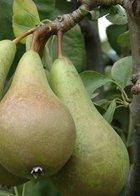
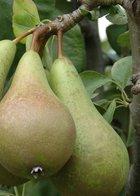
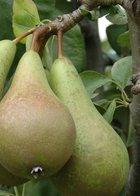
    Raised by the famous Seabrooks Nursery in Essex, a popular garden Pear tree because it is self fertile so will produce good fruits on it’s own. Has good disease resistance and is capable of heavy crops, grows well everywhere. Although ideally suited to dessert, it can also be cooked and bottled. Improved Fertility Pear Tree – season Harvest from mid September for use for about a month. Improved Fertility Pear – appearance Fairly small fruits of green-gold densely covered in russet. Flavour Sweet, mild and enjoyable! Improved Fertility Pear – Pollination Improved Fertility is self fertile so does not need other trees for it to fruit well. It is itself in grou ‘C’ so can be used to help varieties in the same or adjacent groups to crop. Tree sizes for Improved Fertility Pear trees: Quince C rootstock Is the most compact stock generally used for Pears. It can be maintained at an easily harvested 180-260cm’s and can be planted around 150-180cm’s apart. Quince ‘C’ is easily the most satisfactory rootstock for garden use and can even be incorporated into a large – say 24” – container and kept on the patio. Such trees may be restricted below the 180cm mark. Quince A rootstock Is more vigorous than Quince ‘C’ and is ideal for orchard planting, grassy area’s and the larger border. It will grow to 250-350cm’s and should be planted not less than 250cm’s apart. A heavy cropping tree suitable for most good soils and situations.
    Improved Fertility Pear tree Improved Fertility Pear Trees Raised by the famous Seabrooks Nursery in Essex, a popular garden Pear tree because it is self fertile so will produce good fruits on it’s own. Has good disease resistance and is capable of heavy crops, grows well everywhere. Although ideally suited to dessert, it can also be cooked and bottled. Improved Fertility Pear Tree – season Harvest from mid September for use for about a month. Improved Fertility Pear – appearance Fairly small fruits of green-gold densely covered in russet. Flavour Sweet, mild and enjoyable! Improved Fertility Pear – Pollination Improved Fertility is self fertile so does not need other trees for it to fruit well. It is itself in grou ‘C’ so can be used to help varieties in the same or adjacent groups to crop. Tree sizes for Improved Fertility Pear trees: Quince C rootstock Is the most compact stock generally used for Pears. It can be maintained at an easily harvested 180-260cm’s and can be planted around 150-180cm’s apart. Quince ‘C’ is easily the most satisfactory rootstock for garden use and can even be incorporated into a large – say 24” – container and kept on the patio. Such trees may be restricted below the 180cm mark. Quince A rootstock Is more vigorous than Quince ‘C’ and is ideal for orchard planting, grassy area’s and the larger border. It will grow to 250-350cm’s and should be planted not less than 250cm’s apart. A heavy cropping tree suitable for most good soils and situations.
    Self fertile Pear Trees
  • Damson Trees Damson Trees
  • Nectraine trees Nectraine trees
  • Testimonials Testimonials
  • Violetta Plum tree, 2444, 237330, Violetta Plum tree Violetta Plum tree
    Beautiful violet purple egg-shaped fruits may be enjoyed as dessert [or cooked with] at the turn of July and August. Really excellent flavour; a good, hardy and disease resistant tree, this new variety has done very well in trials and has a promising future.
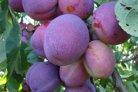
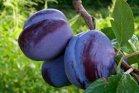
    Violetta is a new North European variety with some very fine attaributes. It is very frost hardy and does not reequire a polinator to produce an abundant crop. Dessert or dual purpose. A very abundant cropper and reliable in all areas. Violetta plum tree – season Late July to early August ripening. Violetta Plum – appearance & flavour Beautiful, oval dusky violet purple throughout. Inside greenish-yellow, juicy, well flavoured and ideal for all purpose. Violetta – pollination No pollinators are required to produce the beautiful fruit. Tree sizes for Violetta plum tree: St Julien ‘A’ A vigorous tree mostly used for field and grassy area’s, paddock and orchard. Promotes high yields and makes a good disease-resistant tree suitable for most soils and areas. It will mature to 360cm’s approx with a spread slightly less. Plant 300cm’s apart. Can be grown into half standard or bush form. Pixy Rootstock Is the only ‘dwarf’ rootstock for Plums. An ideal choice for smaller areas and contained gardens, it is also happy being kept in a 20-24” container [using John Innes no 2 compost] Can be maintained at around 200cm’s although it will grow more without pruning. Space 180-210cm’s apart.
    Violetta Plum tree Violetta Plum trees for sale Violetta is a new North European variety with some very fine attaributes. It is very frost hardy and does not reequire a polinator to produce an abundant crop. Dessert or dual purpose. A very abundant cropper and reliable in all areas. Violetta plum tree – season Late July to early August ripening. Violetta Plum – appearance & flavour Beautiful, oval dusky violet purple throughout. Inside greenish-yellow, juicy, well flavoured and ideal for all purpose. Violetta – pollination No pollinators are required to produce the beautiful fruit. Tree sizes for Violetta plum tree: St Julien ‘A’ A vigorous tree mostly used for field and grassy area’s, paddock and orchard. Promotes high yields and makes a good disease-resistant tree suitable for most soils and areas. It will mature to 360cm’s approx with a spread slightly less. Plant 300cm’s apart. Can be grown into half standard or bush form. Pixy Rootstock Is the only ‘dwarf’ rootstock for Plums. An ideal choice for smaller areas and contained gardens, it is also happy being kept in a 20-24” container [using John Innes no 2 compost] Can be maintained at around 200cm’s although it will grow more without pruning. Space 180-210cm’s apart.
    Frost hardy Plum trees, Plums - self fertile varieties
  • Victoria plum trees, 2437, 237293, Victoria plum trees Victoria plum trees
    Here it is, the most famous and well-loved named in Plum growing history! The delectable, sweet flavour, thin skin and sheer versatility of this garden classic has led to it's domination over the years. Self fertile; try to thin the fruits during years of over-abundance to ensure come for next year
    The most well known and enduring Plum tree variety of them all, scarcely needing description. Generally does well, during years of over-abundance some thinning is a good idea to prevent bi-ennial cropping. The classic dual purpose plum. Victoria plum tree – season Generally can be used from late August to mid September. Victoria Plum – appearance & flavour Oval light red over yellow, when fully ripen purple-red. Juicy yellow inner flesh, sumptuous flavour. Perfect for dessert but also admirably suited to all culinary purposes. Victoria – pollination No pollinators are required to produce the large, quality fruits. Tree sizes for Victoria plum tree: St Julien ‘A’ A vigorous tree mostly used for field and grassy area’s, paddock and orchard. Promotes high yields and makes a good disease-resistant tree suitable for most soils and areas. It will mature to 360cm’s approx with a spread slightly less. Plant 300cm’s apart. Can be grown into half standard or bush form. Pixy Rootstock Is the only ‘dwarf’ rootstock for Plums. An ideal choice for smaller areas and contained gardens, it is also happy being kept in a 20-24” container [using John Innes no 2 compost] Can be maintained at around 200cm’s although it will grow more without pruning. Space 180-210cm’s apart.
    Victoria plum trees Victoria Plum trees for sale The most well known and enduring Plum tree variety of them all, scarcely needing description. Generally does well, during years of over-abundance some thinning is a good idea to prevent bi-ennial cropping. The classic dual purpose plum. Victoria plum tree – season Generally can be used from late August to mid September. Victoria Plum – appearance & flavour Oval light red over yellow, when fully ripen purple-red. Juicy yellow inner flesh, sumptuous flavour. Perfect for dessert but also admirably suited to all culinary purposes. Victoria – pollination No pollinators are required to produce the large, quality fruits. Tree sizes for Victoria plum tree: St Julien ‘A’ A vigorous tree mostly used for field and grassy area’s, paddock and orchard. Promotes high yields and makes a good disease-resistant tree suitable for most soils and areas. It will mature to 360cm’s approx with a spread slightly less. Plant 300cm’s apart. Can be grown into half standard or bush form. Pixy Rootstock Is the only ‘dwarf’ rootstock for Plums. An ideal choice for smaller areas and contained gardens, it is also happy being kept in a 20-24” container [using John Innes no 2 compost] Can be maintained at around 200cm’s although it will grow more without pruning. Space 180-210cm’s apart.
    Best Selling, Plums - self fertile varieties

  • Marjories Seedling Plum tree, 2420, 237268, Marjories Seedling Plum tree Marjories Seedling Plum tree
    Marjories is a dependable and very useful late ripening plum, infact it is usually the last Plum to hang on the tree. The fruits are quite large, oval-circular and light purple over green. Inside the flesh is greenish, juicy and has a good flavour. Suits dual purpose. Hardy and self fertile too.
    Marjories Seedling is one of the best varieties and is suitable for all area’s. It is also recommended as a late-season extender and has fruits of very good quality. Marjories Seedling plum tree – season Late September and will hang into October providing quality late fruits. Marjories Seedling Plum – appearance & flavour Medium to large in size, somewhat circular, ripening to a fine deep purple usually with a dusky bloom and the occassional green flush. Flesh golden yellow with a good flavour; highly favoured for pies, jams and freezing but more than suited to dessert use when fully ripe. Marjories Seedling – pollination Self fertile so may be grown as a sole tree. Also a good pollinator for other varieties. Tree sizes for Marjories Seedling plum tree: St Julien ‘A’ A vigorous tree mostly used for field and grassy area’s, paddock and orchard. Promotes high yields and makes a good disease-resistant tree suitable for most soils and areas. It will mature to 360cm’s approx with a spread slightly less. Plant 300cm’s apart. Can be grown into half standard or bush form. Pixy Rootstock Is the only ‘dwarf’ rootstock for Plums. An ideal choice for smaller areas and contained gardens, it is also happy being kept in a 20-24” container [using John Innes no 2 compost] Can be maintained at around 200cm’s although it will grow more without pruning. Space 180-210cm’s apart.
    Marjories Seedling Plum tree Marjories Seedling Plum trees for sale Marjories Seedling is one of the best varieties and is suitable for all area’s. It is also recommended as a late-season extender and has fruits of very good quality. Marjories Seedling plum tree – season Late September and will hang into October providing quality late fruits. Marjories Seedling Plum – appearance & flavour Medium to large in size, somewhat circular, ripening to a fine deep purple usually with a dusky bloom and the occassional green flush. Flesh golden yellow with a good flavour; highly favoured for pies, jams and freezing but more than suited to dessert use when fully ripe. Marjories Seedling – pollination Self fertile so may be grown as a sole tree. Also a good pollinator for other varieties. Tree sizes for Marjories Seedling plum tree: St Julien ‘A’ A vigorous tree mostly used for field and grassy area’s, paddock and orchard. Promotes high yields and makes a good disease-resistant tree suitable for most soils and areas. It will mature to 360cm’s approx with a spread slightly less. Plant 300cm’s apart. Can be grown into half standard or bush form. Pixy Rootstock Is the only ‘dwarf’ rootstock for Plums. An ideal choice for smaller areas and contained gardens, it is also happy being kept in a 20-24” container [using John Innes no 2 compost] Can be maintained at around 200cm’s although it will grow more without pruning. Space 180-210cm’s apart.
    Frost hardy Plum trees, Plums - self fertile varieties
  • Jubilee plum trees, 2412, 237227, Jubilee plum trees Jubilee plum trees
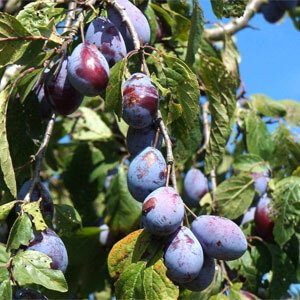
    This very fine variety has actually succeeded Victoria in popularity is now our top selling Plum tree! It is very very hardy and very productive with fruits of good dessert quality. Season - about 10 days before Victoria. Highly recommended; self fertile.
    Jubilee [syn ‘Jubileeum’] is a superb recent introduction from Sweden that combines hardiness, fruit quality and self-fertile flowering to a marked degree. Described as the ideal garden Plum tree and our best--selling variety. The results achieved with Jubilee and always first class. Recommended highly. Jubilee plum tree – season Mid-late August, usually in season for about 3 weeks. Jubilee Plum – appearance & flavour Medium to large and light red with a yellow flesh. Flavour good, sweet and not too acid and although mostly used for dessert also cooks well. Jubilee – pollination Self fertile so fine on it’s own. Tree sizes for Jubilee plum tree: St Julien ‘A’ A vigorous tree mostly used for field and grassy area’s, paddock and orchard. Promotes high yields and makes a good disease-resistant tree suitable for most soils and areas. It will mature to 360cm’s approx with a spread slightly less. Plant 300cm’s apart. Can be grown into half standard or bush form. Pixy Rootstock Is the only ‘dwarf’ rootstock for Plums. An ideal choice for smaller areas and contained gardens, it is also happy being kept in a 20-24” container [using John Innes no 2 compost] Can be maintained at around 200cm’s although it will grow more without pruning. Space 180-210cm’s apart.
    Jubilee plum trees Jubilee Plum trees for sale Jubilee [syn ‘Jubileeum’] is a superb recent introduction from Sweden that combines hardiness, fruit quality and self-fertile flowering to a marked degree. Described as the ideal garden Plum tree and our best--selling variety. The results achieved with Jubilee and always first class. Recommended highly. Jubilee plum tree – season Mid-late August, usually in season for about 3 weeks. Jubilee Plum – appearance & flavour Medium to large and light red with a yellow flesh. Flavour good, sweet and not too acid and although mostly used for dessert also cooks well. Jubilee – pollination Self fertile so fine on it’s own. Tree sizes for Jubilee plum tree: St Julien ‘A’ A vigorous tree mostly used for field and grassy area’s, paddock and orchard. Promotes high yields and makes a good disease-resistant tree suitable for most soils and areas. It will mature to 360cm’s approx with a spread slightly less. Plant 300cm’s apart. Can be grown into half standard or bush form. Pixy Rootstock Is the only ‘dwarf’ rootstock for Plums. An ideal choice for smaller areas and contained gardens, it is also happy being kept in a 20-24” container [using John Innes no 2 compost] Can be maintained at around 200cm’s although it will grow more without pruning. Space 180-210cm’s apart.
    Frost hardy Plum trees, Plums - self fertile varieties
  • Czar Plum tree, 2405, 237218, Czar Plum tree Czar Plum tree
    The Czar is a favourite early variety valued for it's hardiness, good flavour and reliabilty. Late July-August in season.
    The Czar is one of the most popular of all Plum tree varieties and is always recommended as a durable, hardy cropper. It suits dual purpose and is also self fertile & easy to grow. Czar plum tree – season Usually ripening from laye July/early August. Czar Plum – appearance & flavour No more than medium sized, semi circular dark violet-purple. Mostly used for cooking but also suits dessert. Good flavour. Czae – pollination Self fertile so fine on it’s own. Tree sizes for Czar plum tree: St Julien ‘A’ A vigorous tree mostly used for field and grassy area’s, paddock and orchard. Promotes high yields and makes a good disease-resistant tree suitable for most soils and areas. It will mature to 360cm’s approx with a spread slightly less. Plant 300cm’s apart. Can be grown into half standard or bush form. Pixy Rootstock Is the only ‘dwarf’ rootstock for Plums. An ideal choice for smaller areas and contained gardens, it is also happy being kept in a 20-24” container [using John Innes no 2 compost] Can be maintained at around 200cm’s although it will grow more without pruning. Space 180-210cm’s apart.
    Czar Plum tree £19.60 - £26.95 Czar Plum trees for sale The Czar is one of the most popular of all Plum tree varieties and is always recommended as a durable, hardy cropper. It suits dual purpose and is also self fertile & easy to grow. Czar plum tree – season Usually ripening from laye July/early August. Czar Plum – appearance & flavour No more than medium sized, semi circular dark violet-purple. Mostly used for cooking but also suits dessert. Good flavour. Czae – pollination Self fertile so fine on it’s own. Tree sizes for Czar plum tree: St Julien ‘A’ A vigorous tree mostly used for field and grassy area’s, paddock and orchard. Promotes high yields and makes a good disease-resistant tree suitable for most soils and areas. It will mature to 360cm’s approx with a spread slightly less. Plant 300cm’s apart. Can be grown into half standard or bush form. Pixy Rootstock Is the only ‘dwarf’ rootstock for Plums. An ideal choice for smaller areas and contained gardens, it is also happy being kept in a 20-24” container [using John Innes no 2 compost] Can be maintained at around 200cm’s although it will grow more without pruning. Space 180-210cm’s apart.
    Frost hardy Plum trees, Plums - self fertile varieties
  • Blue Tit plum trees, 2398, 237209, Blue Tit plum trees Blue Tit plum trees
    Ripening early August, this beautiful dusky blue Plum has a fine yellow flesh that is suitable for dessert use. An easy to grow tree.
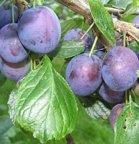
    A relatively recent introduction and already popular as a garden tree. Blue Tit is a quality dessert Plum. Blue Tit plum tree – season This variety ripens fairly early, from the first week in August. Blue Tit Plum – appearance & flavour Medium sized to large deep blue-purple, inside golden yellow and juicy. Fine, sweet flavour. Blue Tit Plum – pollination Self fertile so requires no pollinator and is itself a good pollinator for other varieties. Tree sizes for Blue Tit plum trees: St Julien ‘A’ A vigorous tree mostly used for field and grassy area’s, paddock and orchard. Promotes high yields and makes a good disease-resistant tree suitable for most soils and areas. It will mature to 360cm’s approx with a spread slightly less. Plant 300cm’s apart. Can be grown into half standard or bush form. Pixy Rootstock Is the only ‘dwarf’ rootstock for Plums. An ideal choice for smaller areas and contained gardens, it is also happy being kept in a 20-24” container [using John Innes no 2 compost] Can be maintained at around 200cm’s although it will grow more without pruning. Space 180-210cm’s apart.
    Blue Tit plum trees Blue Tit Plum trees for sale A relatively recent introduction and already popular as a garden tree. Blue Tit is a quality dessert Plum. Blue Tit plum tree – season This variety ripens fairly early, from the first week in August. Blue Tit Plum – appearance & flavour Medium sized to large deep blue-purple, inside golden yellow and juicy. Fine, sweet flavour. Blue Tit Plum – pollination Self fertile so requires no pollinator and is itself a good pollinator for other varieties. Tree sizes for Blue Tit plum trees: St Julien ‘A’ A vigorous tree mostly used for field and grassy area’s, paddock and orchard. Promotes high yields and makes a good disease-resistant tree suitable for most soils and areas. It will mature to 360cm’s approx with a spread slightly less. Plant 300cm’s apart. Can be grown into half standard or bush form. Pixy Rootstock Is the only ‘dwarf’ rootstock for Plums. An ideal choice for smaller areas and contained gardens, it is also happy being kept in a 20-24” container [using John Innes no 2 compost] Can be maintained at around 200cm’s although it will grow more without pruning. Space 180-210cm’s apart.
    Plums - self fertile varieties
  • Burbanks Giant Prune Plum trees, 2392, 237214, Burbanks Giant Prune Plum trees Burbanks Giant Prune Plum trees
    A fine old variety that has been popular over the years and crops heavily. Mostly used for cooking but also suited to dessert when fully ripen; mid-late season. A hardy good doer.
    This rather old and well known variety is one of the hardiest Plums so is good for frosty area’s, normally prtoducing a good crop under most conditions. A very heavily yielding tree that is primarily used for cooking purposes at which it excels. Burbanks Giant Prune plum tree – season Early-mid September, keeps well. Burbanks Giant Prune Plum – appearance & flavour Medium sized, shapely, oval reddish-purple, flesh golden. Firm texture which is fine for bottling and makes a great pie or for jams etc; will suit dessert when fully ripe. Burbanks Giant Prune – pollination Self fertile so fine on it’s own. Tree sizes for Burbanks Giant Prune plum tree: St Julien ‘A’ A vigorous tree mostly used for field and grassy area’s, paddock and orchard. Promotes high yields and makes a good disease-resistant tree suitable for most soils and areas. It will mature to 360cm’s approx with a spread slightly less. Plant 300cm’s apart. Can be grown into half standard or bush form. Pixy Rootstock Is the only ‘dwarf’ rootstock for Plums. An ideal choice for smaller areas and contained gardens, it is also happy being kept in a 20-24” container [using John Innes no 2 compost] Can be maintained at around 200cm’s although it will grow more without pruning. Space 180-210cm’s apart.
    Burbanks Giant Prune Plum trees Burbanks Giant Prune Plum trees for sale This rather old and well known variety is one of the hardiest Plums so is good for frosty area’s, normally prtoducing a good crop under most conditions. A very heavily yielding tree that is primarily used for cooking purposes at which it excels. Burbanks Giant Prune plum tree – season Early-mid September, keeps well. Burbanks Giant Prune Plum – appearance & flavour Medium sized, shapely, oval reddish-purple, flesh golden. Firm texture which is fine for bottling and makes a great pie or for jams etc; will suit dessert when fully ripe. Burbanks Giant Prune – pollination Self fertile so fine on it’s own. Tree sizes for Burbanks Giant Prune plum tree: St Julien ‘A’ A vigorous tree mostly used for field and grassy area’s, paddock and orchard. Promotes high yields and makes a good disease-resistant tree suitable for most soils and areas. It will mature to 360cm’s approx with a spread slightly less. Plant 300cm’s apart. Can be grown into half standard or bush form. Pixy Rootstock Is the only ‘dwarf’ rootstock for Plums. An ideal choice for smaller areas and contained gardens, it is also happy being kept in a 20-24” container [using John Innes no 2 compost] Can be maintained at around 200cm’s although it will grow more without pruning. Space 180-210cm’s apart.
    Frost hardy Plum trees, Plums - self fertile varieties
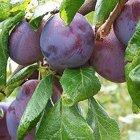
  • Warwickshire Drooper plum tree, 2390, 237335, Warwickshire Drooper plum tree Warwickshire Drooper plum tree
    So named because it has a characteristic drooping habit when older. Yellow fruits, sweet and good for dessert. Self fertile..
    A distinguished and classic old variety that is so named because older trees develop a characteristic somewhat drooping habit. A yellow plum mostly used for dessert. Ideal as a specimen tree. Warwickshire Drooper plum tree – season Mid late September is the time to enjoy the fruits of this variety. Warwickshire Drooper Plum – appearance & flavour A pretty plum of medium sized, pale yellow when ripe. Sweet and mild flavour, perfect eaten straight from the tree when ripe. Wawrwickshire Drooper – pollination Can be grown on it’s own, as it is self pollinating. Tree sizes for Warwickshire Drooper plum tree: St Julien ‘A’ A vigorous tree mostly used for field and grassy area’s, paddock and orchard. Promotes high yields and makes a good disease-resistant tree suitable for most soils and areas. It will mature to 360cm’s approx with a spread slightly less. Plant 300cm’s apart. Can be grown into half standard or bush form. Pixy Rootstock Is the only ‘dwarf’ rootstock for Plums. An ideal choice for smaller areas and contained gardens, it is also happy being kept in a 20-24” container [using John Innes no 2 compost] Can be maintained at around 200cm’s although it will grow more without pruning. Space 180-210cm’s apart.
    Warwickshire Drooper plum tree Warwickshire Drooper Plum trees for sale A distinguished and classic old variety that is so named because older trees develop a characteristic somewhat drooping habit. A yellow plum mostly used for dessert. Ideal as a specimen tree. Warwickshire Drooper plum tree – season Mid late September is the time to enjoy the fruits of this variety. Warwickshire Drooper Plum – appearance & flavour A pretty plum of medium sized, pale yellow when ripe. Sweet and mild flavour, perfect eaten straight from the tree when ripe. Wawrwickshire Drooper – pollination Can be grown on it’s own, as it is self pollinating. Tree sizes for Warwickshire Drooper plum tree: St Julien ‘A’ A vigorous tree mostly used for field and grassy area’s, paddock and orchard. Promotes high yields and makes a good disease-resistant tree suitable for most soils and areas. It will mature to 360cm’s approx with a spread slightly less. Plant 300cm’s apart. Can be grown into half standard or bush form. Pixy Rootstock Is the only ‘dwarf’ rootstock for Plums. An ideal choice for smaller areas and contained gardens, it is also happy being kept in a 20-24” container [using John Innes no 2 compost] Can be maintained at around 200cm’s although it will grow more without pruning. Space 180-210cm’s apart.
    Plums - self fertile varieties, Yellow Plum trees
  • Yellow Pershore Plum tree, 2383, 237282, Yellow Pershore Plum tree Yellow Pershore Plum tree
    This is the classic variety for bottling and preserving and also makes a gorgoeus golden jam, has a very sweet flavour with little acidity. Hardy and reliable variety, self fertile. Also known as Yellow Egg.
    A popular choice for bottling, jams and preserves or pies, this yellow Plum has a mild sweet taste and is generally easy to grow. Pershore Yellow plum tree – season Is ripe mid to late August. Pershore Yellow Plum – appearance & flavour A pretty primrose yellow plum, interior apricot yellow, somewhat dry and flavourless if eaten fresh but cooked transforms itself into juicy golden nectar! Pershore Yellow – pollination Self fertile so will carry a good crop on it’s own. Tree sizes for Pershore Yellow plum tree: St Julien ‘A’ A vigorous tree mostly used for field and grassy area’s, paddock and orchard. Promotes high yields and makes a good disease-resistant tree suitable for most soils and areas. It will mature to 360cm’s approx with a spread slightly less. Plant 300cm’s apart. Can be grown into half standard or bush form. Pixy Rootstock Is the only ‘dwarf’ rootstock for Plums. An ideal choice for smaller areas and contained gardens, it is also happy being kept in a 20-24” container [using John Innes no 2 compost] Can be maintained at around 200cm’s although it will grow more without pruning. Space 180-210cm’s apart.
    Yellow Pershore Plum tree Pershore Yellow Plum trees for sale A popular choice for bottling, jams and preserves or pies, this yellow Plum has a mild sweet taste and is generally easy to grow. Pershore Yellow plum tree – season Is ripe mid to late August. Pershore Yellow Plum – appearance & flavour A pretty primrose yellow plum, interior apricot yellow, somewhat dry and flavourless if eaten fresh but cooked transforms itself into juicy golden nectar! Pershore Yellow – pollination Self fertile so will carry a good crop on it’s own. Tree sizes for Pershore Yellow plum tree: St Julien ‘A’ A vigorous tree mostly used for field and grassy area’s, paddock and orchard. Promotes high yields and makes a good disease-resistant tree suitable for most soils and areas. It will mature to 360cm’s approx with a spread slightly less. Plant 300cm’s apart. Can be grown into half standard or bush form. Pixy Rootstock Is the only ‘dwarf’ rootstock for Plums. An ideal choice for smaller areas and contained gardens, it is also happy being kept in a 20-24” container [using John Innes no 2 compost] Can be maintained at around 200cm’s although it will grow more without pruning. Space 180-210cm’s apart.
    Frost hardy Plum trees, Plums - self fertile varieties, Yellow Plum trees
  • Belle de Louvain plum trees, 2377, 237168, Belle de Louvain plum trees Belle de Louvain plum trees
    An excellent hardy cooking plum that nearly always produces bountiful crops of well flavoured fruit. Suitable for all areas and easy to grow
    An excellent hardy choice that is suitable for growing everywhere and normally produces good crops, the potential is for very heavy yields. Belle de Louvain is predominantly a cooking variety. Belle de Louvain plum tree – season Usually ready mid August and may be used into September; hangs on the tree well. Belle de Louvain Plum – appearance & flavour Medium sized oval, reddish becoming deep purple with a slight dusky bloom. Very tart flavour that becomes rich and decadent when cooked, superb for bottling, jams, pies and freezing. Belle de Louvain Plum – pollination This variety is self fertile so requires no pollinators. Tree sizes for Belle de Louvain plum: St Julien ‘A’ A vigorous tree mostly used for field and grassy area’s, paddock and orchard. Promotes high yields and makes a good disease-resistant tree suitable for most soils and areas. It will mature to 360cm’s approx with a spread slightly less. Plant 300cm’s apart. Can be grown into half standard or bush form. Pixy Rootstock Is the only ‘dwarf’ rootstock for Plums. An ideal choice for smaller areas and contained gardens, it is also happy being kept in a 20-24” container [using John Innes no 2 compost] Can be maintained at around 200cm’s although it will grow more without pruning. Space 180-210cm’s apart.
    Belle de Louvain Plum trees for sale An excellent hardy choice that is suitable for growing everywhere and normally produces good crops, the potential is for very heavy yields. Belle de Louvain is predominantly a cooking variety. Belle de Louvain plum tree – season Usually ready mid August and may be used into September; hangs on the tree well. Belle de Louvain Plum – appearance & flavour Medium sized oval, reddish becoming deep purple with a slight dusky bloom. Very tart flavour that becomes rich and decadent when cooked, superb for bottling, jams, pies and freezing. Belle de Louvain Plum – pollination This variety is self fertile so requires no pollinators. Tree sizes for Belle de Louvain plum: St Julien ‘A’ A vigorous tree mostly used for field and grassy area’s, paddock and orchard. Promotes high yields and makes a good disease-resistant tree suitable for most soils and areas. It will mature to 360cm’s approx with a spread slightly less. Plant 300cm’s apart. Can be grown into half standard or bush form. Pixy Rootstock Is the only ‘dwarf’ rootstock for Plums. An ideal choice for smaller areas and contained gardens, it is also happy being kept in a 20-24” container [using John Innes no 2 compost] Can be maintained at around 200cm’s although it will grow more without pruning. Space 180-210cm’s apart.
    Frost hardy Plum trees
  • Worcester Pearmain mini M27, 2375, 236673, Worcester Pearmain mini M27 Worcester Pearmain mini M27
    A prolific yield of fruits ripening in September. Distinctive sweet fruity flavour. One of the most popular varieties of all time.
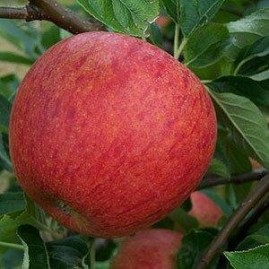
    This Worcester Pearmain apple tree is grown on miniature M27 stock. M27 is a rootstock that produces the smallest tree of all; maturing to around 180cm’s in height and width, this tree is ideal for a container or small garden, courtyard or allotment. It should be staked if in a windy or open position. Crops can exceed 20ibs per tree when established and this rootstock is quite precocious, often yielding the year following planting. This is one of the most famous garden apple trees of all, 1800’s St Johns Worcester. Believed to be a seedling of Devonshire Quarrenden. Worcester is the predominant second early apple. Worcester Pearmain miniature apple tree – Season: Harvest during September to enjoy at it’s best. Worcester Pearmain – appearance: A conical apple of medium size, pale yellow with light pinky red flush and striped predominating. Worcester Pearmain apple trees – flavour: Allowed to ripen properly on the tree a fine apple, sweet and juicy with a delicate hint of strawberries. Commercial sho-bought samples are usually disappointing. Uses: Best for dessert use. Cropping & Growth A very good cropper on a tree of medium vigour that is easy to grow but unsuited to cordon growing. Best as a bush tree. Worcester Pearmain Apple Trees - Pollination: Pollination group ‘C’ partner with any varieties in the same or adjacent groups. Here are some suggested varieties: Spartan Charles Ross Howgate Wonder Greensleeves James Grieve Self fertile Cox's Pixie
    Worcester Pearmain mini M27 Worcester Pearmain miniature M27 Apple Trees for sale This Worcester Pearmain apple tree is grown on miniature M27 stock. M27 is a rootstock that produces the smallest tree of all; maturing to around 180cm’s in height and width, this tree is ideal for a container or small garden, courtyard or allotment. It should be staked if in a windy or open position. Crops can exceed 20ibs per tree when established and this rootstock is quite precocious, often yielding the year following planting. This is one of the most famous garden apple trees of all, 1800’s St Johns Worcester. Believed to be a seedling of Devonshire Quarrenden. Worcester is the predominant second early apple. Worcester Pearmain miniature apple tree – Season: Harvest during September to enjoy at it’s best. Worcester Pearmain – appearance: A conical apple of medium size, pale yellow with light pinky red flush and striped predominating. Worcester Pearmain apple trees – flavour: Allowed to ripen properly on the tree a fine apple, sweet and juicy with a delicate hint of strawberries. Commercial sho-bought samples are usually disappointing. Uses: Best for dessert use. Cropping & Growth A very good cropper on a tree of medium vigour that is easy to grow but unsuited to cordon growing. Best as a bush tree. Worcester Pearmain Apple Trees - Pollination: Pollination group ‘C’ partner with any varieties in the same or adjacent groups. Here are some suggested varieties: Spartan Charles Ross Howgate Wonder Greensleeves James Grieve Self fertile Cox's Pixie
    Miniature Apple Trees

fruit-trees.com
01366386858