Search results

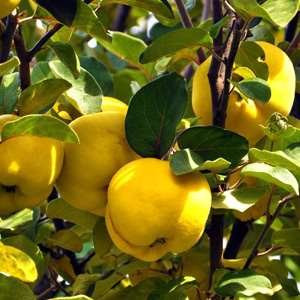
  • Quince trees Quince trees
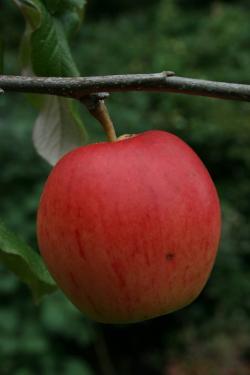
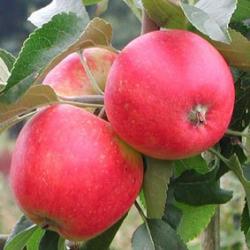
  • Winston cordon tree, 1838, , Winston cordon tree Winston cordon tree
    One of the best keepers, fruits of 'Winston' habitually keep until April or beyond, with no special treatment. Flavour is like a mild Cox.
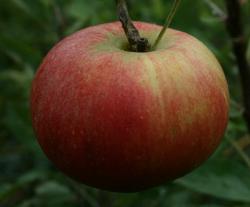
    Cordon Apple trees are a good choice for restricted areas and a fence or wall. They can be grown at a 45degree angle, or upright. The rootstock we use for our cordon Winston is M9 which is the best stock for cordon trees. Plant 60-80cm’s apart. Winston arose in Berkshire, 1920, from a Cox’s Orange x Worcester cross. A useful late storing apple that is easy to grow and disease resistant. Winston cordon apple tree – Season: Very late; harvest in November and eat from storage December to April. Winston – appearance: Small to medium in size, green with purplish flush and stripes, becoming brighter in storage. Winston apple treesflavour: An aromatic Cox-type flavour, mellows later. Uses: A dessert apple for late use. Cropping & Growth Moderately vigorous, suitable for growing everywhere and easy to grow. Winston Apple Trees - Pollination: Partly self fertile so will yield on it’s own. Pollination group ‘D’
    Winston cordon Apple Trees Cordon Apple trees are a good choice for restricted areas and a fence or wall. They can be grown at a 45degree angle, or upright. The rootstock we use for our cordon Winston is M9 which is the best stock for cordon trees. Plant 60-80cm’s apart. Winston arose in Berkshire, 1920, from a Cox’s Orange x Worcester cross. A useful late storing apple that is easy to grow and disease resistant. Winston cordon apple tree – Season: Very late; harvest in November and eat from storage December to April. Winston – appearance: Small to medium in size, green with purplish flush and stripes, becoming brighter in storage. Winston apple trees – flavour: An aromatic Cox-type flavour, mellows later. Uses: A dessert apple for late use. Cropping & Growth Moderately vigorous, suitable for growing everywhere and easy to grow. Winston Apple Trees - Pollination: Partly self fertile so will yield on it’s own. Pollination group ‘D’
    Cordon Apple Trees
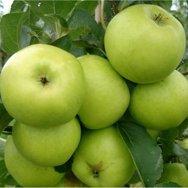
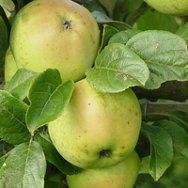
  • Grenadier mini M27, 2005, 235849, Grenadier mini M27 Grenadier mini M27
    The best early culinary apple with a really good flavour, needs less sugar than most. Hardy and reliable; season August & September.
    This Grenadier apple tree is grown on miniature M27 stock. M27 is a rootstock that produces the smallest tree of all; maturing to around 180cm’s in height and width, this tree is ideal for a container or small garden, courtyard or allotment. It should be staked if in a windy or open position. Crops can exceed 20ibs per tree when established and this rootstock is quite precocious, often yielding the year following planting. Grenadier’s origins are unknown but a famous early cooker and usually the first culinary apple fit for use. Grenadier miniature M27 Apple tree – Season: For use throughout August and into September. Grenadier Apple - appearance: Grenadier is a large, roundly conical pale green apple. Grenadier apple trees – flavour: Breaks down to a juicy puree, very good slightly sharp taste but sweeter than many cookers and versatile in the kitchen. Uses: A classic culinary kitchen apple. Cropping & Growth Medium vigour, heavy cropper and trouble free. An excellent cooking apple tree and recommended. Grenadier - Pollination: ‘B’ Pollination group, so use varieties with the same or adjacent pollinating prefixes. Here are some suggested varieties: Discovery Elstar Falstaff Cox's Orange Pippin Bountiful Crimson Queening
    Grenadier miniature M27 Apple trees This Grenadier apple tree is grown on miniature M27 stock. M27 is a rootstock that produces the smallest tree of all; maturing to around 180cm’s in height and width, this tree is ideal for a container or small garden, courtyard or allotment. It should be staked if in a windy or open position. Crops can exceed 20ibs per tree when established and this rootstock is quite precocious, often yielding the year following planting. Grenadier’s origins are unknown but a famous early cooker and usually the first culinary apple fit for use. Grenadier miniature M27 Apple tree – Season: For use throughout August and into September. Grenadier Apple - appearance: Grenadier is a large, roundly conical pale green apple. Grenadier apple trees – flavour: Breaks down to a juicy puree, very good slightly sharp taste but sweeter than many cookers and versatile in the kitchen. Uses: A classic culinary kitchen apple. Cropping & Growth Medium vigour, heavy cropper and trouble free. An excellent cooking apple tree and recommended. Grenadier - Pollination: ‘B’ Pollination group, so use varieties with the same or adjacent pollinating prefixes. Here are some suggested varieties: Discovery Elstar Falstaff Cox's Orange Pippin Bountiful Crimson Queening
    Miniature Apple Trees
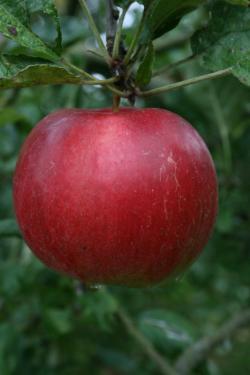
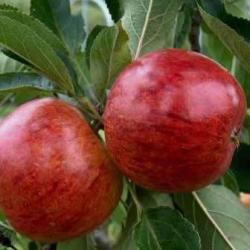
  • Empire cordon tree, 1581, , Empire cordon tree Empire cordon tree
    Very clean crisp white flesh and a super-sweet, mild flavour together with that glorious dark red skin colour make this a most attractive apple to grow.
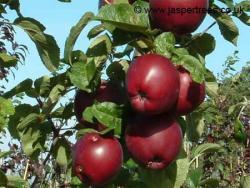
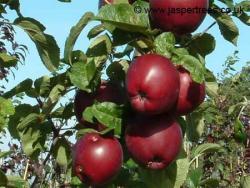
    Cordon Apple trees are a good choice for restricted areas and a fence or wall. They can be grown at a 45degree angle, or upright. The rootstock we use for our cordon is M9 which is the best stock for cordon trees. Plant 60-80cm’s apart. Empire is an American apple, and very popular there. Raised 1945. Sometimes seen for sale in supermarkets here, a very handsome deeply lacquered red apple. Empire cordon Apple tree – Season: Pick from the tree in early-mid Octrober; will store until January or longer. Empire Apple - appearance: A moderately sized handsome apple almost entirely covered by a dark wine red shiny flush. Empire apple treesflavour: Very sweet, mild, vinous. Juicy texture crisp at first, becomes softer. Uses: A classic dessert apple. Cropping & Growth Medium vigour, heavily cropping. Empire - Pollination: ‘B’ Pollination group, so use varieties with the same or adjacent pollinating prefixes. Here are some good suggestions: Discovery Elstar Egremont Russet Crimson Queening Bountiful Arthur Turner Cox's Orange Pippin
    Empire cordon Apple trees Cordon Apple trees are a good choice for restricted areas and a fence or wall. They can be grown at a 45degree angle, or upright. The rootstock we use for our cordon is M9 which is the best stock for cordon trees. Plant 60-80cm’s apart. Empire is an American apple, and very popular there. Raised 1945. Sometimes seen for sale in supermarkets here, a very handsome deeply lacquered red apple. Empire cordon Apple tree – Season: Pick from the tree in early-mid Octrober; will store until January or longer. Empire Apple - appearance: A moderately sized handsome apple almost entirely covered by a dark wine red shiny flush. Empire apple trees – flavour: Very sweet, mild, vinous. Juicy texture crisp at first, becomes softer. Uses: A classic dessert apple. Cropping & Growth Medium vigour, heavily cropping. Empire - Pollination: ‘B’ Pollination group, so use varieties with the same or adjacent pollinating prefixes. Here are some good suggestions: Discovery Elstar Egremont Russet Crimson Queening Bountiful Arthur Turner Cox's Orange Pippin
    Cordon Apple Trees
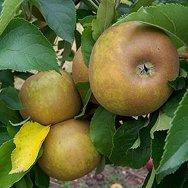
  • Empire miniature M27 tree, 1987, 235464, Empire miniature M27 tree Empire miniature M27 tree
    Very sweet handsomely dark wine red flushed fruits, will store.
    This Empire apple tree is grown on miniature M27 stock. M27 is a rootstock that produces the smallest tree of all; maturing to around 180cm’s in height and width, this tree is ideal for a container or small garden, courtyard or allotment. It should be staked if in a windy or open position. Crops can exceed 20ibs per tree when established and this rootstock is quite precocious, often yielding the year following planting. Empire is an American apple, and very popular there. Raised 1945. Sometimes seen for sale in supermarkets here, a very handsome deeply lacquered red apple. Empire cordon Apple tree – Season: Pick from the tree in early-mid Octrober; will store until January or longer. Empire Apple - appearance: A moderately sized handsome apple almost entirely covered by a dark wine red shiny flush. Empire apple trees – flavour: Very sweet, mild, vinous. Juicy texture crisp at first, becomes softer. Uses: A classic dessert apple. Cropping & Growth Medium vigour, heavily cropping. Empire - Pollination: ‘B’ Pollination group, so use varieties with the same or adjacent pollinating prefixes. Some suggested varieties are listed below: Cox's Orange Pippin Discovery Egremont Russet Elstar Crimson Queening Bountiful
    Empire miniature M27 Apple trees This Empire apple tree is grown on miniature M27 stock. M27 is a rootstock that produces the smallest tree of all; maturing to around 180cm’s in height and width, this tree is ideal for a container or small garden, courtyard or allotment. It should be staked if in a windy or open position. Crops can exceed 20ibs per tree when established and this rootstock is quite precocious, often yielding the year following planting. Empire is an American apple, and very popular there. Raised 1945. Sometimes seen for sale in supermarkets here, a very handsome deeply lacquered red apple. Empire cordon Apple tree – Season: Pick from the tree in early-mid Octrober; will store until January or longer. Empire Apple - appearance: A moderately sized handsome apple almost entirely covered by a dark wine red shiny flush. Empire apple trees – flavour: Very sweet, mild, vinous. Juicy texture crisp at first, becomes softer. Uses: A classic dessert apple. Cropping & Growth Medium vigour, heavily cropping. Empire - Pollination: ‘B’ Pollination group, so use varieties with the same or adjacent pollinating prefixes. Some suggested varieties are listed below: Cox's Orange Pippin Discovery Egremont Russet Elstar Crimson Queening Bountiful
    Miniature Apple Trees
  • Limleight mini M27, 2200, 236147, Limleight mini M27 Limleight mini M27
    A self fertile variety, ideal for gardens with space for only one apple tree. The flavour is sprightly, juicy and refreshing but not too tart. For use late Sept to late November. An excellent variety.
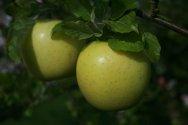
    This Limelight apple tree is grown on miniature M27 stock. M27 is a rootstock that produces the smallest tree of all; maturing to around 180cm’s in height and width, this tree is ideal for a container or small garden, courtyard or allotment. It should be staked if in a windy or open position. Crops can exceed 20ibs per tree when established and this rootstock is quite precocious, often yielding the year following planting. Limelight is a very good new English Apple tree that is regarded as the ‘perfect’ garden Apple tree. Well worth considering for your planting requirements, especially for small gardens. Limelight miniature Apple tree – Season: This variety can be picked in late September and eaten until late November. Limelight - appearance: Although not highly coloured this is an attractive apple with a very clean and shiny appearance and luminous chartreuse green/yellow colouring throughout. Limelight apple trees – flavour: Sweet but refreshingly juicy and crisp. Uses: A dessert apple primarily but may also be cooked with. Cropping & Growth A naturally small and productive tree that is easy to grow and low maintenance, needs less pruning than some. Frost and disease resistant. Limelight - Pollination: This variety is self fertile so ideal for the one tree garden. It is in the ‘B’ pollination group and is a good pollinator for other varieties within that group.
    Limelight miniature M27 Apple trees This Limelight apple tree is grown on miniature M27 stock. M27 is a rootstock that produces the smallest tree of all; maturing to around 180cm’s in height and width, this tree is ideal for a container or small garden, courtyard or allotment. It should be staked if in a windy or open position. Crops can exceed 20ibs per tree when established and this rootstock is quite precocious, often yielding the year following planting. Limelight is a very good new English Apple tree that is regarded as the ‘perfect’ garden Apple tree. Well worth considering for your planting requirements, especially for small gardens. Limelight miniature Apple tree – Season: This variety can be picked in late September and eaten until late November. Limelight - appearance: Although not highly coloured this is an attractive apple with a very clean and shiny appearance and luminous chartreuse green/yellow colouring throughout. Limelight apple trees – flavour: Sweet but refreshingly juicy and crisp. Uses: A dessert apple primarily but may also be cooked with. Cropping & Growth A naturally small and productive tree that is easy to grow and low maintenance, needs less pruning than some. Frost and disease resistant. Limelight - Pollination: This variety is self fertile so ideal for the one tree garden. It is in the ‘B’ pollination group and is a good pollinator for other varieties within that group.
    Miniature Apple Trees
  • Spartan Cordon tree, 1829, , Spartan Cordon tree Spartan Cordon tree
    A very popular apple for it's excellent sweet flavour and yielding pure white interior which contrasts with the stunning dark red outer skin. A very prolific cropper, easy to grow. Stores for us until late December.
    Cordon Apple trees are a good choice for restricted areas and a fence or wall. They can be grown at a 45degree angle, or upright. The rootstock we use for our cordon Spartan epple tree is M9 which is the best stock for cordon trees. Plant 60-80cm’s apart. Spartan has been enormously popular in the UK for so many years it might come as a surprise to learn that this is actually an American apple, raised 1926 from a Mc Intosh cross. One of the top 10 most satisfactory garden or orchard apples. Spartan cordon apple tree – Season: For use October to the turn of the year. Spartan – appearance: A gorgeous apple almost entirely coloured dark maroon red. Inside very white; no more than medium sized. Spartan apple treesflavour: The tender pure white flesh is decidedly sweet and mellow with a lightly fruity flavour. Notes of melon or strawberry are usually present. Uses: A dessert apple. Cropping & Growth A tree of medium vigour, very heavy cropper. Spartan Apple Trees - Pollination: Spartan is partly self fertile and belongs in pollination group ‘C’ and will pollinate well with any other varieties in the same of adjacent groups. Here are some suggested varieties: Charles Ross Annie Elizabeth Falstaff Gala Merton Knave Self fertile Cox's Kidds Orange Red
    Spartan cordon Apple Tree Cordon Apple trees are a good choice for restricted areas and a fence or wall. They can be grown at a 45degree angle, or upright. The rootstock we use for our cordon Spartan epple tree is M9 which is the best stock for cordon trees. Plant 60-80cm’s apart. Spartan has been enormously popular in the UK for so many years it might come as a surprise to learn that this is actually an American apple, raised 1926 from a Mc Intosh cross. One of the top 10 most satisfactory garden or orchard apples. Spartan cordon apple tree – Season: For use October to the turn of the year. Spartan – appearance: A gorgeous apple almost entirely coloured dark maroon red. Inside very white; no more than medium sized. Spartan apple trees – flavour: The tender pure white flesh is decidedly sweet and mellow with a lightly fruity flavour. Notes of melon or strawberry are usually present. Uses: A dessert apple. Cropping & Growth A tree of medium vigour, very heavy cropper. Spartan Apple Trees - Pollination: Spartan is partly self fertile and belongs in pollination group ‘C’ and will pollinate well with any other varieties in the same of adjacent groups. Here are some suggested varieties: Charles Ross Annie Elizabeth Falstaff Gala Merton Knave Self fertile Cox's Kidds Orange Red
    Cordon Apple Trees
  • Kidds Orange cordon tree, 1746, , Kidds Orange cordon tree Kidds Orange cordon tree
    Rich aromatic flavour, reminiscent of Cox's Orange but easier to grow. A New Zealand apple raised in the 1920's. Season November-December.
    Cordon Apple trees are a good choice for restricted areas and a fence or wall. They can be grown at a 45degree angle, or upright. The rootstock we use for our cordon is M9 which is the best stock for cordon trees. Plant 60-80cm’s apart. Kidds Orange red was raised in New Zealand, 1927 from a Cox’s Orange x Delicious cross. Quickly became popular in England and remains an oft-planted garden apple and a good alternative to Cox’s Orange that is easier to grow. Kidds Orange Red cordon Apple tree – Season: November and December is the best time to enjoy Kidds Orange Red. Kidds Orange Red - appearance: This is a medium sized apple of gleaming yellow-gold, heavily flushed carmine red. May have some russet patches. A beautiful apple. Kidds Orange Red apple treesflavour: Similar to a Cox’s with the same strongly aromatic, balanaced flavour, but does mellow with storing, developing floral notes. Uses: A dessert apple. Cropping & Growth An abundant cropper on a tree of medium vigour. Kidds Orange Red - Pollination: ‘B’ pollination group, use varieties with the same or adjacent groups to pollinate successfully.  Here are some suggested varieties: Elstar Bountiful Discovery Grenadier Katy Hereforfdshire Russet Empire
    Kidds Orange Red cordon Apple trees for sale Cordon Apple trees are a good choice for restricted areas and a fence or wall. They can be grown at a 45degree angle, or upright. The rootstock we use for our cordon is M9 which is the best stock for cordon trees. Plant 60-80cm’s apart. Kidds Orange red was raised in New Zealand, 1927 from a Cox’s Orange x Delicious cross. Quickly became popular in England and remains an oft-planted garden apple and a good alternative to Cox’s Orange that is easier to grow. Kidds Orange Red cordon Apple tree – Season: November and December is the best time to enjoy Kidds Orange Red. Kidds Orange Red - appearance: This is a medium sized apple of gleaming yellow-gold, heavily flushed carmine red. May have some russet patches. A beautiful apple. Kidds Orange Red apple trees – flavour: Similar to a Cox’s with the same strongly aromatic, balanaced flavour, but does mellow with storing, developing floral notes. Uses: A dessert apple. Cropping & Growth An abundant cropper on a tree of medium vigour. Kidds Orange Red - Pollination: ‘B’ pollination group, use varieties with the same or adjacent groups to pollinate successfully.  Here are some suggested varieties: Elstar Bountiful Discovery Grenadier Katy Hereforfdshire Russet Empire
    Cordon Apple Trees
  • Spartan fan espalier trees, 1652, , Spartan fan espalier trees Spartan fan espalier trees
    Spartan has consistently been voted one of Englands most eatable apples. The pure white interior is very sweet and has a lovely yielding texture. This is a very reliable apple that produces very good yields on all rootstocks. Season October-December or later.
    Espalier or fan trees are used against a wall; you will need not less than 180 x 180cm’s for a fan or espalier tree. Please note we do not supply ready trained trees; this Spartan apple tree is a young tree suitable for training yourself, in situ. Such trees usually settle to cropping within 2 or 3 seasons. Spartan has been enormously popular in the UK for so many years it might come as a surprise to learn that this is actually an American apple, raised 1926 from a Mc Intosh cross. One of the top 10 most satisfactory garden or orchard apples. Spartan apple tree – Season: Spartan – appearance: A gorgeous apple almost entirely coloured dark maroon red. Inside very white; no more than medium sized. Spartan apple treesflavour: The tender pure white flesh is decidedly sweet and mellow with a lightly fruity flavour. Notes of melon or strawberry are usually present. Uses: A dessert apple. Cropping & Growth A ree of medium vigour, very heavy cropper. Spartan Apple Trees - Pollination: Spartan is partly self fertile and belongs in pollination group ‘C’ and will pollinate well with any other varieties in the same of adjacent groups. Here are some suggested varieties: Charles Ross Annie Elizabeth Falstaff Lobo Merton Knave Self fertile Cox's Kidds Orange Red
    Spartan fan espalier Apple Tree Espalier or fan trees are used against a wall; you will need not less than 180 x 180cm’s for a fan or espalier tree. Please note we do not supply ready trained trees; this Spartan apple tree is a young tree suitable for training yourself, in situ. Such trees usually settle to cropping within 2 or 3 seasons. Spartan has been enormously popular in the UK for so many years it might come as a surprise to learn that this is actually an American apple, raised 1926 from a Mc Intosh cross. One of the top 10 most satisfactory garden or orchard apples. Spartan apple tree – Season: Spartan – appearance: A gorgeous apple almost entirely coloured dark maroon red. Inside very white; no more than medium sized. Spartan apple trees – flavour: The tender pure white flesh is decidedly sweet and mellow with a lightly fruity flavour. Notes of melon or strawberry are usually present. Uses: A dessert apple. Cropping & Growth A ree of medium vigour, very heavy cropper. Spartan Apple Trees - Pollination: Spartan is partly self fertile and belongs in pollination group ‘C’ and will pollinate well with any other varieties in the same of adjacent groups. Here are some suggested varieties: Charles Ross Annie Elizabeth Falstaff Lobo Merton Knave Self fertile Cox's Kidds Orange Red
    Fan and Espalier Apple Trees
  • Discovery cordon, 1554, , Discovery cordon Discovery cordon
    One of the most popular eaters with a lovely flavour and easy to grow. Does well as a cordon.
    Discovery cordon Apple trees Cordon Apple trees are a good choice for restricted areas and a fence or wall. They can be grown at a 45degree angle, or upright. The rootstock we use for our cordon Discovery trees is M9 which is the best stock for cordon trees. Plant 60-80cm’s apart Discovery is an Essex raised variety, believed to be a Worcester x Beauty of Bath cross. This famous variety is probably the best early dessert apple. One of the best and most popular of garden varieties. Discovery cordon Apple tree – Season: Enjoy straight from the tree, from early August through to mid September. Discovery Apple - appearance: A medium sized apple partly or completely covered by a spread of glorious crimson red. Base colour is yellow-green. Discovery apple treesflavour: Clean white flesh with a pleasant, sweet, clean and refreshing flavour. Has a pleasing scent when freshly picked. Uses: A dessert apple through and through. Cropping & Growth A tree of medium vigour, freely cropping and generally trouble free. Discovery - Pollination: ‘B’ Pollination group, so use varieties with the same or adjacent pollinating prefixes. Here are some suggestions of varieties that will go well with Discovery: Cox's Orange Pippin Arthur Turner Crimson Queening Bountiful Beauty of Bath
    Discovery cordon Apple trees Cordon Apple trees are a good choice for restricted areas and a fence or wall. They can be grown at a 45degree angle, or upright. The rootstock we use for our cordon Discovery trees is M9 which is the best stock for cordon trees. Plant 60-80cm’s apart Discovery is an Essex raised variety, believed to be a Worcester x Beauty of Bath cross. This famous variety is probably the best early dessert apple. One of the best and most popular of garden varieties. Discovery cordon Apple tree – Season: Enjoy straight from the tree, from early August through to mid September. Discovery Apple - appearance: A medium sized apple partly or completely covered by a spread of glorious crimson red. Base colour is yellow-green. Discovery apple trees – flavour: Clean white flesh with a pleasant, sweet, clean and refreshing flavour. Has a pleasing scent when freshly picked. Uses: A dessert apple through and through. Cropping & Growth A tree of medium vigour, freely cropping and generally trouble free. Discovery - Pollination: ‘B’ Pollination group, so use varieties with the same or adjacent pollinating prefixes. Here are some suggestions of varieties that will go well with Discovery: Cox's Orange Pippin Arthur Turner Crimson Queening Bountiful Beauty of Bath
    Cordon Apple Trees
  • Arthur Turner M27, 1856, 234960, Arthur Turner M27 Arthur Turner M27
    Arthur Turner is a good early cooking apple and very frost tolerant.

    Arthur Turner Apple M27

    Arthur Turner M27 Miniature Arthur Turner Apple Tree A famous name in cooking apple trees, Arthur Turner here is offered on the mini M27 stock which is very easy to manage. This tree is also suitable for a pot.  Arthur Turner on M27 is a very good reliable early variety that does well in the North. Arthur Turner – Season: An early variety. Harvest in late August, for use through September. Arthur Turner – appearance: Moderately large, pale green with the occassional pink flush. Arthur Turner apple trees – flavour: A good balance of sweetness and acidity. Cooks to a fairly sharp puree; good for sauces and excels for baking. Uses: A cooking apple through and through. . Cropping & Growth Vigorous, hardy, upright grower. Particularly beautiful in blossom and very frost reistant. Arthur Turner - Pollination: Pollination group is ‘B’ so choose any varieties in that group to partner. Here are some suggested varieties: Bountiful Katy James Grieve Greensleeves Discovery
    Arthur Turner Apple M27 Arthur Turner M27 Miniature Arthur Turner Apple Tree A famous name in cooking apple trees, Arthur Turner here is offered on the mini M27 stock which is very easy to manage. This tree is also suitable for a pot.  Arthur Turner on M27 is a very good reliable early variety that does well in the North. Arthur Turner – Season: An early variety. Harvest in late August, for use through September. Arthur Turner – appearance: Moderately large, pale green with the occassional pink flush. Arthur Turner apple trees – flavour: A good balance of sweetness and acidity. Cooks to a fairly sharp puree; good for sauces and excels for baking. Uses: A cooking apple through and through. . Cropping & Growth Vigorous, hardy, upright grower. Particularly beautiful in blossom and very frost reistant. Arthur Turner - Pollination: Pollination group is ‘B’ so choose any varieties in that group to partner. Here are some suggested varieties: Bountiful Katy James Grieve Greensleeves Discovery
    Miniature Apple Trees
  • Red Ellison cordon tree, 1800, , Red Ellison cordon tree Red Ellison cordon tree
    Lovely red flushed apples with same subtle taste of anissed as it's parent, Ellisons Orange. Very heavy cropper, easy to grow.
    Cordon Apple trees are a good choice for restricted areas and a fence or wall. They can be grown at a 45degree angle, or upright. The rootstock we use for our cordon is M9 which is the best stock for cordon trees. Plant 60-80cm’s apart. Red Ellison is simply a red sport of the Ellisons Orange apple tree. Red Ellison Apple tree – Season: Enjoy this variety from late September to November. Red Ellisons - appearance: Conical green-yellow heavily striped and mottled in red. Red Ellisons apple treesflavour: Very distinctive taste – the tender, juicy flesh has a sweet aniseed taste. Uses: A dessert apple. Cropping & Growth Medium growth, hardy and disease free. Heavy cropper. Red Ellison - Pollination: Red Ellisons is in pollination group ‘C’ so will pollinate well with varieties in the same or adjacent groups. Here are some suggested varieties: Peasgood Nonsuch Charles Ross Chivers Delight Laxtons Epicure Laxtons Superb Monarch Pitmaston Pineapple
    Red Ellison cordon Apple trees Cordon Apple trees are a good choice for restricted areas and a fence or wall. They can be grown at a 45degree angle, or upright. The rootstock we use for our cordon is M9 which is the best stock for cordon trees. Plant 60-80cm’s apart. Red Ellison is simply a red sport of the Ellisons Orange apple tree. Red Ellison Apple tree – Season: Enjoy this variety from late September to November. Red Ellisons - appearance: Conical green-yellow heavily striped and mottled in red. Red Ellisons apple trees – flavour: Very distinctive taste – the tender, juicy flesh has a sweet aniseed taste. Uses: A dessert apple. Cropping & Growth Medium growth, hardy and disease free. Heavy cropper. Red Ellison - Pollination: Red Ellisons is in pollination group ‘C’ so will pollinate well with varieties in the same or adjacent groups. Here are some suggested varieties: Peasgood Nonsuch Charles Ross Chivers Delight Laxtons Epicure Laxtons Superb Monarch Pitmaston Pineapple
    Cordon Apple Trees
  • Egremont Russet mini M27 tree, 1983, 235416, Egremont Russet mini M27 tree Egremont Russet mini M27 tree
    Egremont Russet makes an excellent small tree for the garden or patio on this M27 rootstock. The fruits can be used from September to November and it is frost hardy.
    This Egremont Russet tree is grown on miniature M27 stock. M27 is a rootstock that produces the smallest tree of all; maturing to around 180cm’s in height and width, this tree is ideal for a container or small garden, courtyard or allotment. It should be staked if in a windy or open position. Crops can exceed 20ibs per tree when established and this rootstock is quite precocious, often yielding the year following planting Egremont Russet is simply the quintessential russet apple. Despite it’s name, probably not Cumbrian, recorded from Somerset in the 1870’s. Remains the most popular and satisfactory garden russet apple. Egremont Russet miniature Apple tree – Season: Suitable for picking late September and usually keeps through November or December. Egremont Apple - appearance: Small to medium sized flattened circular apple, pale green mostly covered in dense golden brown russet. Occasional bronze flush. Egremont apple trees – flavour: Cream flesh distinctively crumbly/firm texture, fairly dry. Savoury, nutty ‘green’ taste. Uses: A dessert apple also useful for slicing and adding to salads or gardnishes. Cropping & Growth An upright, easily managed tree; good disease resistance and hardy. Good for the North. Suits all growing methods. Egremont Russet - Pollination: ‘A’ Pollination group, so use varieties with the same or adjacent pollinating prefixes. Here are some suggested varieties: Christmas Pearmain Cox's Orange Pippin Beauty of Bath Discovery Arthur Turner
    Egremont Russet miniature M27 Apple trees for sale This Egremont Russet tree is grown on miniature M27 stock. M27 is a rootstock that produces the smallest tree of all; maturing to around 180cm’s in height and width, this tree is ideal for a container or small garden, courtyard or allotment. It should be staked if in a windy or open position. Crops can exceed 20ibs per tree when established and this rootstock is quite precocious, often yielding the year following planting Egremont Russet is simply the quintessential russet apple. Despite it’s name, probably not Cumbrian, recorded from Somerset in the 1870’s. Remains the most popular and satisfactory garden russet apple. Egremont Russet miniature Apple tree – Season: Suitable for picking late September and usually keeps through November or December. Egremont Apple - appearance: Small to medium sized flattened circular apple, pale green mostly covered in dense golden brown russet. Occasional bronze flush. Egremont apple trees – flavour: Cream flesh distinctively crumbly/firm texture, fairly dry. Savoury, nutty ‘green’ taste. Uses: A dessert apple also useful for slicing and adding to salads or gardnishes. Cropping & Growth An upright, easily managed tree; good disease resistance and hardy. Good for the North. Suits all growing methods. Egremont Russet - Pollination: ‘A’ Pollination group, so use varieties with the same or adjacent pollinating prefixes. Here are some suggested varieties: Christmas Pearmain Cox's Orange Pippin Beauty of Bath Discovery Arthur Turner
    Miniature Apple Trees

  • Discovery mini M27, 1981, 235337, Discovery mini M27 Discovery mini M27
    Ready for picking in August and use through September; an easy to grow and hardy popular early.
    Cordon Apple trees are a good choice for restricted areas and a fence or wall. They can be grown at a 45degree angle, or upright. The rootstock we use for our cordon Discovery trees is M9 which is the best stock for cordon trees. Plant 60-80cm’s apart Discovery is an Essex raised variety, believed to be a Worcester x Beauty of Bath cross. This famous variety is probably the best early dessert apple. One of the best and most popular of garden varieties. Discovery miniature Apple tree – Season: Enjoy straight from the tree, from early August through to mid September. Discovery Apple - appearance: A medium sized apple partly or completely covered by a spread of glorious crimson red. Base colour is yellow-green. Discovery apple trees – flavour: Clean white flesh with a pleasant, sweet, clean and refreshing flavour. Has a pleasing scent when freshly picked. Uses: A dessert apple through and through. Cropping & Growth A tree of medium vigour, freely cropping and generally trouble free. Discovery - Pollination: ‘B’ Pollination group, so use varieties with the same or adjacent pollinating prefixes. Here are some good suggested varieties to go with Discovery: Cox's Orange Pippin Crimson Queening Arthur Turner Beauty of Bath Alkmene
    Discovery miniature M27 Apple trees Cordon Apple trees are a good choice for restricted areas and a fence or wall. They can be grown at a 45degree angle, or upright. The rootstock we use for our cordon Discovery trees is M9 which is the best stock for cordon trees. Plant 60-80cm’s apart Discovery is an Essex raised variety, believed to be a Worcester x Beauty of Bath cross. This famous variety is probably the best early dessert apple. One of the best and most popular of garden varieties. Discovery miniature Apple tree – Season: Enjoy straight from the tree, from early August through to mid September. Discovery Apple - appearance: A medium sized apple partly or completely covered by a spread of glorious crimson red. Base colour is yellow-green. Discovery apple trees – flavour: Clean white flesh with a pleasant, sweet, clean and refreshing flavour. Has a pleasing scent when freshly picked. Uses: A dessert apple through and through. Cropping & Growth A tree of medium vigour, freely cropping and generally trouble free. Discovery - Pollination: ‘B’ Pollination group, so use varieties with the same or adjacent pollinating prefixes. Here are some good suggested varieties to go with Discovery: Cox's Orange Pippin Crimson Queening Arthur Turner Beauty of Bath Alkmene
    Miniature Apple Trees
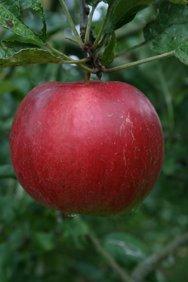
  • Worcester Pearmain stepover, 1959, 236672, Worcester Pearmain stepover Worcester Pearmain stepover
    Season is September with sweet, juicy, lightly flavoured fruits that often have a hint of strawberry flavour. Heavy yielder well known & popular.
    Stepover trees are used primarily for edging a border or pathway or to divide the kitchen/vegetable garden. These very tiny trees are just 18” in height with two side laterals from the main stem forming a capital ‘T’ shape. The stepover tree is an ormamental addition to your garden and these trees are grown on the smallest avaailable rootstock, M27. Plant 120-150cm’s apart. This is one of the most famous garden apple trees of all, 1800’s St Johns Worcester. Believed to be a seedling of Devonshire Quarrenden. Worcester is the predominant second early apple. Worcester Pearmain stepover apple tree – Season: Harvest during September to enjoy at it’s best. Worcester Pearmain – appearance: A conical apple of medium size, pale yellow with light pinky red flush and striped predominating. Worcester Pearmain apple trees – flavour: Allowed to ripen properly on the tree a fine apple, sweet and juicy with a delicate hint of strawberries. Commercial sho-bought samples are usually disappointing. Uses: Best for dessert use. Cropping & Growth A very good cropper on a tree of medium vigour that is easy to grow but unsuited to cordon growing. Best as a bush tree. Worcester Pearmain Apple Trees - Pollination: Pollination group ‘C’ partner with any varieties in the same or adjacent groups. Here are some suggested varieties: Spartan Charles Ross Howgate Wonder Greensleeves James Grieve Self fertile Cox's Pixie
    Worcester Pearmain stepover Worcester Pearmain stepover Apple Trees for sale Stepover trees are used primarily for edging a border or pathway or to divide the kitchen/vegetable garden. These very tiny trees are just 18” in height with two side laterals from the main stem forming a capital ‘T’ shape. The stepover tree is an ormamental addition to your garden and these trees are grown on the smallest avaailable rootstock, M27. Plant 120-150cm’s apart. This is one of the most famous garden apple trees of all, 1800’s St Johns Worcester. Believed to be a seedling of Devonshire Quarrenden. Worcester is the predominant second early apple. Worcester Pearmain stepover apple tree – Season: Harvest during September to enjoy at it’s best. Worcester Pearmain – appearance: A conical apple of medium size, pale yellow with light pinky red flush and striped predominating. Worcester Pearmain apple trees – flavour: Allowed to ripen properly on the tree a fine apple, sweet and juicy with a delicate hint of strawberries. Commercial sho-bought samples are usually disappointing. Uses: Best for dessert use. Cropping & Growth A very good cropper on a tree of medium vigour that is easy to grow but unsuited to cordon growing. Best as a bush tree. Worcester Pearmain Apple Trees - Pollination: Pollination group ‘C’ partner with any varieties in the same or adjacent groups. Here are some suggested varieties: Spartan Charles Ross Howgate Wonder Greensleeves James Grieve Self fertile Cox's Pixie
    Stepover Apple Trees
  • Grenadier stepover tree, 1898, 235847, Grenadier stepover tree Grenadier stepover tree
    Grenadier is the preodminant early cooker, fit for use from ealy-Mid August and then through September. It has a very good flavour and is reliable.
    Stepover trees are used primarily for edging a border or pathway or to divide the kitche/vegetable garden. These very tiny trees are just 18” in height with two side laterals from the main stem forming a capital ‘T’ shape. The stepover tree is an ormamental addition to your garden and these trees are grown on the smallest avaailable rootstock, M27. Plant 120-150cm’s apart. Grenadier’s origins are unknown but a famous early cooker and usually the first culinary apple fit for use. Grenadier stepover Apple tree – Season: For use throughout August and into September. Grenadier Apple - appearance: Grenadier is a large, roundly conical pale green apple. Grenadier apple trees – flavour: Breaks down to a juicy puree, very good slightly sharp taste but sweeter than many cookers and versatile in the kitchen. Uses: A classic culinary kitchen apple. Cropping & Growth Medium vigour, heavy cropper and trouble free. An excellent cooking apple tree and recommended. Grenadier - Pollination: ‘B’ Pollination group, so use varieties with the same or adjacent pollinating prefixes. Here are some suggested varieties: Discovery Bountiful Falstaff Elstar Fortune Arthur Turner Cox's Orange Pippin
    Grenadier stepover tree Grenadier stepover Apple trees Stepover trees are used primarily for edging a border or pathway or to divide the kitche/vegetable garden. These very tiny trees are just 18” in height with two side laterals from the main stem forming a capital ‘T’ shape. The stepover tree is an ormamental addition to your garden and these trees are grown on the smallest avaailable rootstock, M27. Plant 120-150cm’s apart. Grenadier’s origins are unknown but a famous early cooker and usually the first culinary apple fit for use. Grenadier stepover Apple tree – Season: For use throughout August and into September. Grenadier Apple - appearance: Grenadier is a large, roundly conical pale green apple. Grenadier apple trees – flavour: Breaks down to a juicy puree, very good slightly sharp taste but sweeter than many cookers and versatile in the kitchen. Uses: A classic culinary kitchen apple. Cropping & Growth Medium vigour, heavy cropper and trouble free. An excellent cooking apple tree and recommended. Grenadier - Pollination: ‘B’ Pollination group, so use varieties with the same or adjacent pollinating prefixes. Here are some suggested varieties: Discovery Bountiful Falstaff Elstar Fortune Arthur Turner Cox's Orange Pippin
    Stepover Apple Trees
  • Empire stepover tree, 1884, 235462, Empire stepover tree Empire stepover tree
    Ideal for those who prefer sweet, mild apples and certainly a stunner with it's predominantly dark red skin. Will store.
    Stepover trees are used primarily for edging a border or pathway or to divide the kitche/vegetable garden. These very tiny trees are just 18” in height with two side laterals from the main stem forming a capital ‘T’ shape. The stepover tree is an ormamental addition to your garden and these trees are grown on the smallest avaailable rootstock, M27. Plant 120-150cm’s apart Empire is an American apple, and very popular there. Raised 1945. Sometimes seen for sale in supermarkets here, a very handsome deeply lacquered red apple. Empire Apple tree – Season: Pick from the tree in early-mid Octrober; will store until January or longer. Empire Apple - appearance: A moderately sized handsome apple almost entirely covered by a dark wine red shiny flush. Empire apple trees – flavour: Very sweet, mild, vinous. Juicy texture crisp at first, becomes softer. Uses: A classic dessert apple. Cropping & Growth Medium vigour, heavily cropping. Empire - Pollination: ‘B’ Pollination group, so use varieties with the same or adjacent pollinating prefixes. Some suggested varieties are listed as follows: Discovery Elstar Bountiful Adams Pearmain Arthur Turner Alkmene
    Empire stepover tree Empire stepover Apple trees Stepover trees are used primarily for edging a border or pathway or to divide the kitche/vegetable garden. These very tiny trees are just 18” in height with two side laterals from the main stem forming a capital ‘T’ shape. The stepover tree is an ormamental addition to your garden and these trees are grown on the smallest avaailable rootstock, M27. Plant 120-150cm’s apart Empire is an American apple, and very popular there. Raised 1945. Sometimes seen for sale in supermarkets here, a very handsome deeply lacquered red apple. Empire Apple tree – Season: Pick from the tree in early-mid Octrober; will store until January or longer. Empire Apple - appearance: A moderately sized handsome apple almost entirely covered by a dark wine red shiny flush. Empire apple trees – flavour: Very sweet, mild, vinous. Juicy texture crisp at first, becomes softer. Uses: A classic dessert apple. Cropping & Growth Medium vigour, heavily cropping. Empire - Pollination: ‘B’ Pollination group, so use varieties with the same or adjacent pollinating prefixes. Some suggested varieties are listed as follows: Discovery Elstar Bountiful Adams Pearmain Arthur Turner Alkmene
    Stepover Apple Trees
  • Egremont Russet stepover tree, 1877, 235414, Egremont Russet stepover tree Egremont Russet stepover tree
    The characteristic 'nutty' flavour and firm cream flesh has endeared this famous variety for generations. Still the first choice for a Russet tree.
    Stepover trees are used primarily for edging a border or pathway or to divide the kitche/vegetable garden. These very tiny trees are just 18” in height with two side laterals from the main stem forming a capital ‘T’ shape. The stepover tree is an ormamental addition to your garden and these trees are grown on the smallest avaailable rootstock, M27. Plant 120-150cm’s apart. Egremont Russet is simply the quintessential russet apple. Despite it’s name, probably not Cumbrian, recorded from Somerset in the 1870’s. Remains the most popular and satisfactory garden russet apple. Egremont Russet Apple tree – Season: Suitable for picking late September and usually keeps through November or December. Egremont Apple - appearance: Small to medium sized flattened circular apple, pale green mostly covered in dense golden brown russet. Occasional bronze flush. Egremont apple trees – flavour: Cream flesh distinctively crumbly/firm texture, fairly dry. Savoury, nutty ‘green’ taste. Uses: A dessert apple also useful for slicing and adding to salads or gardnishes. Cropping & Growth An upright, easily managed tree; good disease resistance and hardy. Good for the North. Suits all growing methods. Egremont Russet - Pollination: ‘A’ Pollination group, so use varieties with the same or adjacent pollinating prefixes. Here are some good suggested varieties to go with Egremont Russet: Beauty of Bath Christmas Pearmain Discovery Arthur Turner Bakers Delicious
    Egremont Russet stepover tree Egremont Russet stepover Apple trees for sale Stepover trees are used primarily for edging a border or pathway or to divide the kitche/vegetable garden. These very tiny trees are just 18” in height with two side laterals from the main stem forming a capital ‘T’ shape. The stepover tree is an ormamental addition to your garden and these trees are grown on the smallest avaailable rootstock, M27. Plant 120-150cm’s apart. Egremont Russet is simply the quintessential russet apple. Despite it’s name, probably not Cumbrian, recorded from Somerset in the 1870’s. Remains the most popular and satisfactory garden russet apple. Egremont Russet Apple tree – Season: Suitable for picking late September and usually keeps through November or December. Egremont Apple - appearance: Small to medium sized flattened circular apple, pale green mostly covered in dense golden brown russet. Occasional bronze flush. Egremont apple trees – flavour: Cream flesh distinctively crumbly/firm texture, fairly dry. Savoury, nutty ‘green’ taste. Uses: A dessert apple also useful for slicing and adding to salads or gardnishes. Cropping & Growth An upright, easily managed tree; good disease resistance and hardy. Good for the North. Suits all growing methods. Egremont Russet - Pollination: ‘A’ Pollination group, so use varieties with the same or adjacent pollinating prefixes. Here are some good suggested varieties to go with Egremont Russet: Beauty of Bath Christmas Pearmain Discovery Arthur Turner Bakers Delicious
    Stepover Apple Trees
  • Winter Gem cordon, 1841, , Winter Gem cordon Winter Gem cordon
    Winter Gem:
    • Superb storing qualitiee
    • Attractive fruits with a  pink blush
    • Exquisite aromatic full-on flavour
    • Popular garden variety
    Cordon Apple trees are a good choice for restricted areas and a fence or wall. They can be grown at a 45degree angle, or upright. The rootstock we use for our cordon Winter Gem is M9 which is the best stock for cordon trees. Plant 60-80cm’s apart. Winter Gem is an outstanding recently introduced garden apple, of Cox’s parentage. Highly recommended as a late storing variety. Winter Gem cordon apple tree – Season: A late storing variety, pick mid-late October, use from storage right into the Spring. Winter Gem – appearance: A very pretty apple, pale green/yellow blushed with rosy pink. Winter Gem apple treesflavour: Exquisitely flavoured. Scented, complex, rich and aromatic. Uses: A dessert apple that also juices well. Good for table decoration. Cropping & Growth Medium vigour, generally trouble free. Winter Gem Apple Trees - Pollination: Pollination group ‘B’ partner with any varieties in the same or adjacent groups. Here are some suggested varieties: Red Falstaff Cox's Orange Pippin Laxtons Superb Greensleeves Saturn Grenadier Fortune James Grieve
    Winter Gem cordon Apple Trees for sale Cordon Apple trees are a good choice for restricted areas and a fence or wall. They can be grown at a 45degree angle, or upright. The rootstock we use for our cordon Winter Gem is M9 which is the best stock for cordon trees. Plant 60-80cm’s apart. Winter Gem is an outstanding recently introduced garden apple, of Cox’s parentage. Highly recommended as a late storing variety. Winter Gem cordon apple tree – Season: A late storing variety, pick mid-late October, use from storage right into the Spring. Winter Gem – appearance: A very pretty apple, pale green/yellow blushed with rosy pink. Winter Gem apple trees – flavour: Exquisitely flavoured. Scented, complex, rich and aromatic. Uses: A dessert apple that also juices well. Good for table decoration. Cropping & Growth Medium vigour, generally trouble free. Winter Gem Apple Trees - Pollination: Pollination group ‘B’ partner with any varieties in the same or adjacent groups. Here are some suggested varieties: Red Falstaff Cox's Orange Pippin Laxtons Superb Greensleeves Saturn Grenadier Fortune James Grieve
    Cordon Apple Trees
  • Sunset cordon tree, 1832, , Sunset cordon tree Sunset cordon tree
    A good Cox replacement but easier to grow. Superb flavour and superb colouring have ensured popularity for nearly 100 years; generally trouble free. The fruits will store.
    Cordon Apple trees are a good choice for restricted areas and a fence or wall. They can be grown at a 45degree angle, or upright. The rootstock we use for our cordonSunset apple tree is M9 which is the best stock for cordon trees. Plant 60-80cm’s apart. Sunset is a Kentish raised variety, 1918, believed to be a Cox’s seedling. Often regarded as an ideal replacement for Cox, as it is easier to grow but has similar taste. One of the most popular garden apples which is always worth growing. Sunset cordon apple tree – Season: Pick from the tree mid October, stores well, into the New Year. Sunset – appearance: An attractive apple of no more than medium size, pale yellow background broadly flushed vermillion orange – sunset colours indeed. Sunset apple treesflavour: Quite dense, crisp texture and a superb richly aromatic flavour that is almost beyond compare. Uses: A dessert apple. Cropping & Growth A tree of medium vigour, generally trouble free and reliable. Sunset Apple Trees - Pollination: Pollination group ‘B’ partner with any varieties in the same or adjacent groups. Here are somer suggested varieties: Fortune Elstar Kidds Orange Red Bountiful Redsleeves Saturn Red Windsor Greensleeves
    Sunset cordon Apple Trees  Cordon Apple trees are a good choice for restricted areas and a fence or wall. They can be grown at a 45degree angle, or upright. The rootstock we use for our cordonSunset apple tree is M9 which is the best stock for cordon trees. Plant 60-80cm’s apart. Sunset is a Kentish raised variety, 1918, believed to be a Cox’s seedling. Often regarded as an ideal replacement for Cox, as it is easier to grow but has similar taste. One of the most popular garden apples which is always worth growing. Sunset cordon apple tree – Season: Pick from the tree mid October, stores well, into the New Year. Sunset – appearance: An attractive apple of no more than medium size, pale yellow background broadly flushed vermillion orange – sunset colours indeed. Sunset apple trees – flavour: Quite dense, crisp texture and a superb richly aromatic flavour that is almost beyond compare. Uses: A dessert apple. Cropping & Growth A tree of medium vigour, generally trouble free and reliable. Sunset Apple Trees - Pollination: Pollination group ‘B’ partner with any varieties in the same or adjacent groups. Here are somer suggested varieties: Fortune Elstar Kidds Orange Red Bountiful Redsleeves Saturn Red Windsor Greensleeves
    Cordon Apple Trees

fruit-trees.com
01366386858